Grooming at Home
Dog Grooming at Home: A Step-by-Step Guide for Busy Owners

- Dog grooming at home comes down to five jobs: brushing, bathing, nails, ears and teeth. You need about six tools, listed in the table below.
- Brush first, bathe second. Water tightens tangles, so comb the coat out before any bath.
- How often: brush a few times a week (daily for long or curly coats), trim nails about once a month, look in the ears weekly, brush teeth daily if you can, and bathe only when needed.
- Leave to a pro: breed haircuts, mats tight against the skin, heavy de-shedding and nails your dog will not let you touch.
In this guide
Dog grooming at home does not need a grooming table or a garage full of gear. A few short sessions a week keep your dog’s coat, skin, paws and ears in good shape, and they make every professional appointment quicker and cheaper. This guide is the overview: the tools, the step-by-step order, how often to do each job, an easy weekly plan for busy owners, and when to hand it over to a groomer. Each step links to a deeper guide when you want the details.
Can you groom your dog at home?
Yes. Most dogs can get their routine care at home: brushing, baths, nail trims, ear checks and teeth brushing. What is hard to do at home is the skilled work, like a breed haircut, safe dematting and heavy de-shedding. Home care between professional grooms is what keeps those jobs small.
The American Kennel Club puts it simply: grooming your dog at home gives you frequent, hands-on chances to catch health concerns early. While you brush, you also find burrs, cuts, scrapes and small mats before they turn into bigger problems.
What tools do you need for dog grooming at home?
Six tools cover most dogs: a slicker brush, a metal comb, nail clippers or a grinder with styptic powder, a gentle dog shampoo, a dog ear cleaner with cotton pads, and a dog toothbrush with dog toothpaste. Add an undercoat rake for heavy shedders and a bristle brush or rubber curry for short coats.
| Tool | What it does | Which dogs |
|---|---|---|
| Slicker brush | Fine wire pins reach under the top layer and pull out loose hair and small tangles | Medium, long, curly and double coats |
| Metal comb | Checks your work: if it glides from skin to tip, that section is done | Every dog with more than a short coat |
| Bristle brush or rubber curry | Lifts dead hair and spreads skin oils | Short, smooth coats |
| Undercoat rake | Pulls out loose undercoat during heavy sheds | Double coats: Goldens, Shepherds, Huskies |
| Nail clippers or grinder, plus styptic powder | Keeps nails off the floor; the powder stops bleeding if you nick the quick | All dogs |
| Gentle dog shampoo | The AKC advises using only products made for dogs | All dogs |
| Dog ear cleaner and cotton pads | Wipes the visible part of the ear; never cotton swabs in the canal | All dogs, especially floppy ears |
| Dog toothbrush and dog toothpaste | Daily brushing with a veterinary paste is the core of home dental care | All dogs; never human toothpaste |
How to groom your dog at home, step by step
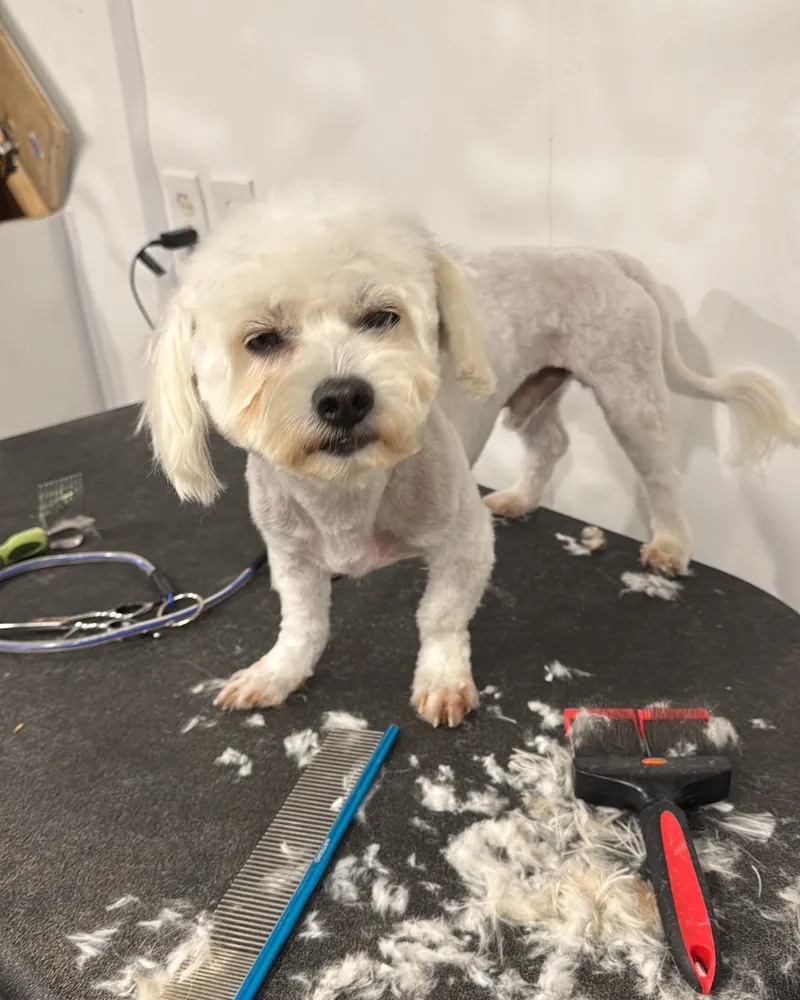
Work in this order: brush and comb, trim nails, check and clean ears, bathe, dry completely, then brush teeth. Brushing comes first because, as VCA veterinarians note, tangles can become impossible to remove after a bath. Split it across the week if your dog gets restless.
- Brush and comb to the skin. Brush in small sections, lifting the hair so you reach the layer underneath, then check with the metal comb. Start with the spots where tangles form first: behind the ears, under the collar, the armpits, the belly and the back of the legs. Our guide on how to brush between grooming appointments shows the line brushing method groomers use.
- Trim the nails. Take small cuts and stay away from the quick, the living part of the nail. VCA veterinarians say most dogs need a trim about once a month. Follow our step-by-step guide to trimming dog nails, including black nails.
- Check and clean the ears. Healthy ears are pale pink with a little light wax and no strong smell. Wipe only the part you can see with a cotton pad and ear cleaner. Our dog ear cleaning guide covers how often and what never to put in the ear.
- Bathe when needed. The ASPCA suggests a shallow bath of about three to four inches of lukewarm water. The AKC says to rinse completely so leftover shampoo does not irritate the skin. Keep water out of the ears.
- Dry completely. Press with a towel instead of rubbing, which tangles long coats. Thick and double coats hold water near the skin for hours, and VCA veterinarians link wet, matted fur to hot spots. VCA also advises always drying the ears after a bath.
- Brush the teeth. Cornell’s veterinary college calls daily brushing with a veterinary toothpaste the mainstay of home dental care. Start with a lick of paste, then a finger, then the brush, over a few days.
How often should you groom your dog at home?
Brush a few times a week, or daily for long, silky and curly coats. Trim nails about once a month. Look in the ears weekly and clean them about monthly. Brush teeth daily if you can. Bathe when your dog is dirty or smells, which for many dogs means every one to three months.
| Job | How often | According to |
|---|---|---|
| Brushing | A few times a week; daily for long, silky or curly coats | AKC, VCA |
| Bath | At least every three months; about every 6 to 8 weeks for non-shedding breeds | ASPCA, VCA |
| Nails | About once a month, or when they touch the ground | VCA |
| Ears | A quick look weekly; cleaning about monthly, and after baths and swims | AKC |
| Teeth | Daily brushing with a veterinary toothpaste | Cornell University |
| Professional groom | About every 4 to 8 weeks for coats that keep growing, like Poodles | AKC |
The AKC also warns that bathing too often can strip natural oils from the skin and coat. Dogs with skin conditions are the exception: follow your veterinarian’s bathing plan. For a breed-by-breed answer on professional visits, read how often to groom your dog.
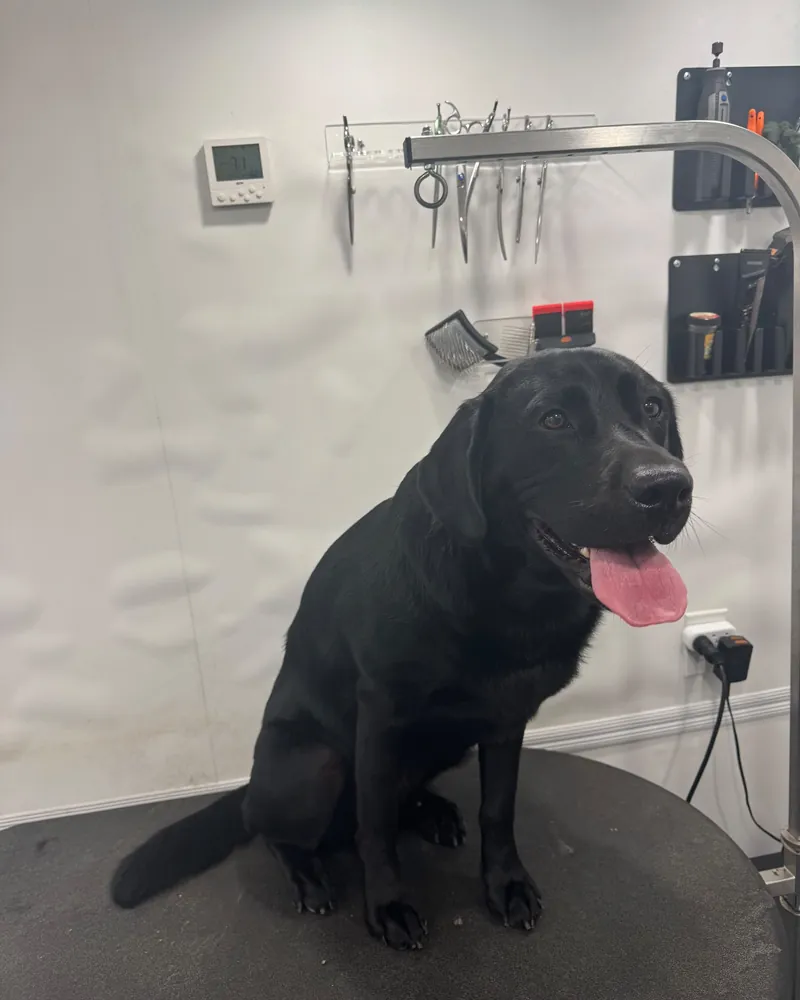
Easy dog grooming: a 10-minute weekly plan
Easy dog grooming means short and regular. Two or three five-minute brushing sessions, one paw and ear check, and a monthly nail trim take about ten minutes a week for most short and medium coats. Long and curly coats need a few minutes more each day. Stop before your dog gets upset.
Nice. Only the groom is left. Book the professional part
Keep every session calm. A board-certified veterinary behaviorist writing for VCA recommends short sessions of a minute or two, a few days a week, paired with treats, especially for nail trims. Pick a quiet moment, such as after a walk.
Can you cut your dog’s hair at home?
You can do small tidy-ups at home, like trimming the hair around the paw pads, if your dog stays still. A full haircut on a Doodle, Poodle, Shih Tzu or Maltese is a different job: it takes clippers, the right blades, a non-slip table and practice. Never use scissors on a mat, because the skin is pulled up into it.
The ASPCA is blunt about that last point: never cut mats out with scissors. Mats should be clipped, and severe matting may need a full-body clip by a groomer or veterinarian. If the coat has gotten away from you, our dematting service works out what can be saved, and a short reset cut handles the rest, with your approval first.
When should you call a professional groomer?
Call a groomer when the coat needs a real haircut, when you find mats close to the skin, when a double coat is dropping hair everywhere, or when your dog will not let you handle its paws. See your veterinarian, not a groomer, for red, smelly or painful ears and skin.
- Haircuts for Doodles, Poodles and other breeds whose hair keeps growing: see full dog grooming.
- Mats tight against the skin: see dog dematting.
- Heavy shedding in double coats: read our guide to grooming double-coated dogs, or book de-shedding.
- A bath you cannot do at home, like a big dog in a small apartment: a mobile dog bath includes the full blow dry, nails, ears and teeth brushing.
- Nails your dog will not let you touch: a nail trim at your door.
Wondering what the professional part costs? Our dog grooming cost guide breaks it down by size and service.
Prefer to leave it to us? Brush Hour comes to your door with a fully equipped grooming van, so your dog gets one-on-one care without a salon trip. Request an appointment.
Frequently asked questions
Can I groom my dog at home?
Yes, for the routine work: brushing, baths, nail trims, ear checks and teeth brushing. Haircuts for coats that keep growing, tight mats and heavy de-shedding are usually easier and safer with a professional groomer.
What is the easiest way to groom a dog at home?
Keep it short and frequent. Brush for a few minutes on most days, check ears and paws once a week, trim nails about once a month and bathe only when your dog is dirty or starts to smell. Short, calm sessions with treats work better than one long struggle.
In what order should I groom my dog?
Brush and comb first, then trim nails and check ears, then bathe, dry completely and brush again once the coat is dry. Brushing comes before the bath because VCA veterinarians note that tangles can become impossible to remove after a bath.
How often should I bathe my dog at home?
Only when needed for most dogs. The ASPCA suggests a bath at least once every three months for a healthy dog, and VCA veterinarians say non-shedding breeds usually need one every six to eight weeks. Bathing too often can dry out the skin and coat.
Can I cut my dog’s hair at home?
Small tidy-ups, yes, if your dog stays still and you use the right tools. A full breed haircut on a Doodle, Poodle or Shih Tzu takes clippers, blades and practice. Never cut a mat out with scissors: the ASPCA warns the skin is easy to cut.
When should I call a professional groomer?
When the coat needs a haircut, when you find mats close to the skin, when a double coat is shedding heavily, or when your dog will not let you touch its paws. Also see your veterinarian for red, smelly or painful ears or skin.
Sources: American Kennel Club, “Dog Grooming at Home: Brushing, Bathing, and Nail Care” (updated September 2, 2026) and “How to Groom a Standard Poodle”; VCA Animal Hospitals, “Grooming and Coat Care for Your Dog” (updated January 30, 2026), “How to Trim a Dog’s Nails”, “Hot Spots in Dogs”, “Prevent swimmer’s ear” and “Taking the Stress out of Nail Trimming for Dogs”; ASPCA, “Dog Grooming Tips” and “A Haircut Could Save a Life: Preventing Your Pet’s Coat from Matting”; Cornell University College of Veterinary Medicine, Riney Canine Health Center, “Periodontal disease”. This guide is general information, not veterinary advice.