Grooming at Home
Double-Coated Dog Grooming: Why Shaving Backfires and What Works Instead
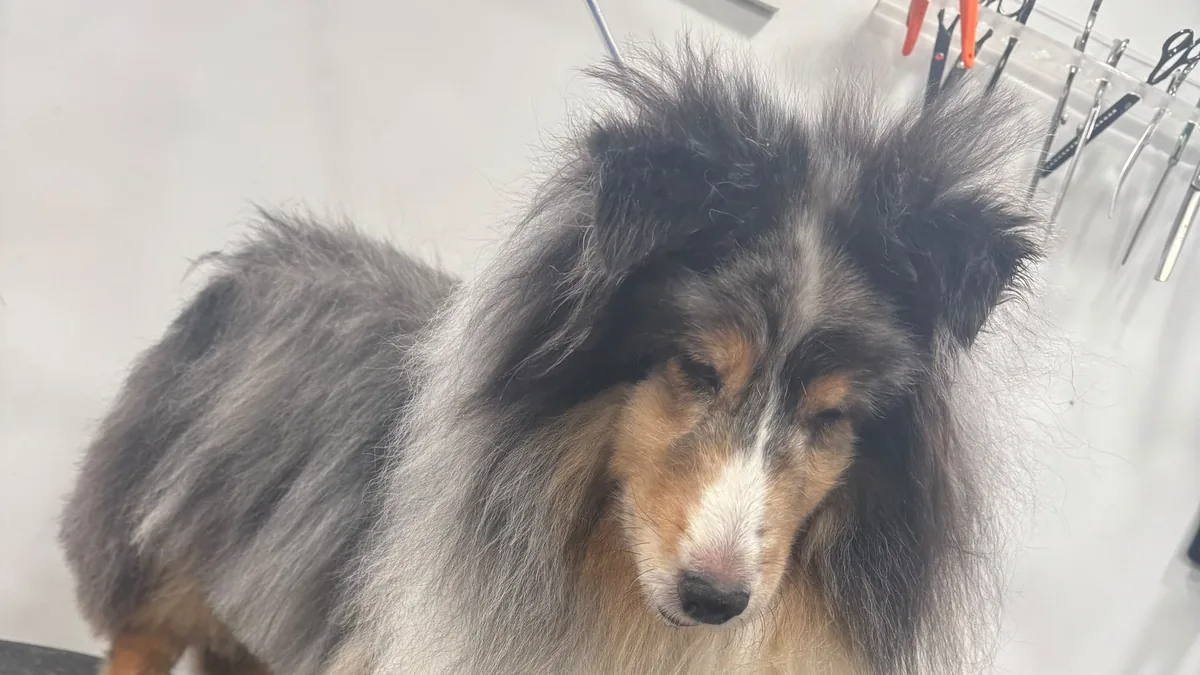
- A double coat has a soft, dense undercoat and longer guard hairs on top. Golden Retrievers, Labs, Shepherds, Huskies and Shelties are classic examples.
- Do not shave it to beat the heat or the shedding. The American Kennel Club says shaving does not stop shedding, damages the topcoat and can leave a dog more exposed to heat and sunburn.
- What works: brush at least weekly with a slicker brush and a comb, add an undercoat rake during heavy sheds, and dry the coat fully after baths and rainy walks.
- In the mild Bay Area climate many double-coated dogs shed on and off all year, so a de-shedding session at the start of each big shed saves a lot of vacuuming.
In this guide
Double-coated dog grooming has one rule that surprises a lot of owners: the fix for a hot, shedding dog is almost never a shave. When the hair is on the couch, in the car and on every black sweater you own, clippers look like the fast answer. This guide explains what a double coat actually does, why veterinarians and groomers push back on shaving, and the simple routine that keeps a double coat healthy, with the sources behind each point.
What is a double coat?
A double coat is two layers of hair. Close to the skin is a soft, dense undercoat that traps air and insulates. On top are longer, coarser guard hairs that shed water, shield the skin and give the coat its color. The undercoat is the part that sheds in clumps; the guard hairs shed much less.
The American Kennel Club describes double coats in several styles: short (Beagle, Labrador Retriever), medium (Golden Retriever, Border Collie), long (Collie, Newfoundland), Arctic (Pomeranian, Samoyed) and wiry (Norwich Terrier). The Shetland Sheepdog is a textbook case. The AKC breed page calls it a profuse double coat that sheds considerably, with a long, harsh outer coat over a short, very dense undercoat.
Should you shave a double-coated dog?
In most cases, no. The undercoat works as insulation in both directions, keeping heat out in summer and warmth in during winter. Shaving removes that layer and the guard hairs that block the sun, does not stop shedding, and can change how the coat grows back. Brushing out the loose undercoat is the better way to help a hot dog.
The American Kennel Club’s chief veterinary officer, Dr. Jerry Klein, warns that a shave can make a double-coated dog more susceptible to heat stroke and sunburn, and VCA veterinarians describe a rare condition, post-clipping alopecia, that can delay regrowth for up to two years. Our de-shedding page explains in more detail why shaving is not the answer for shedding.
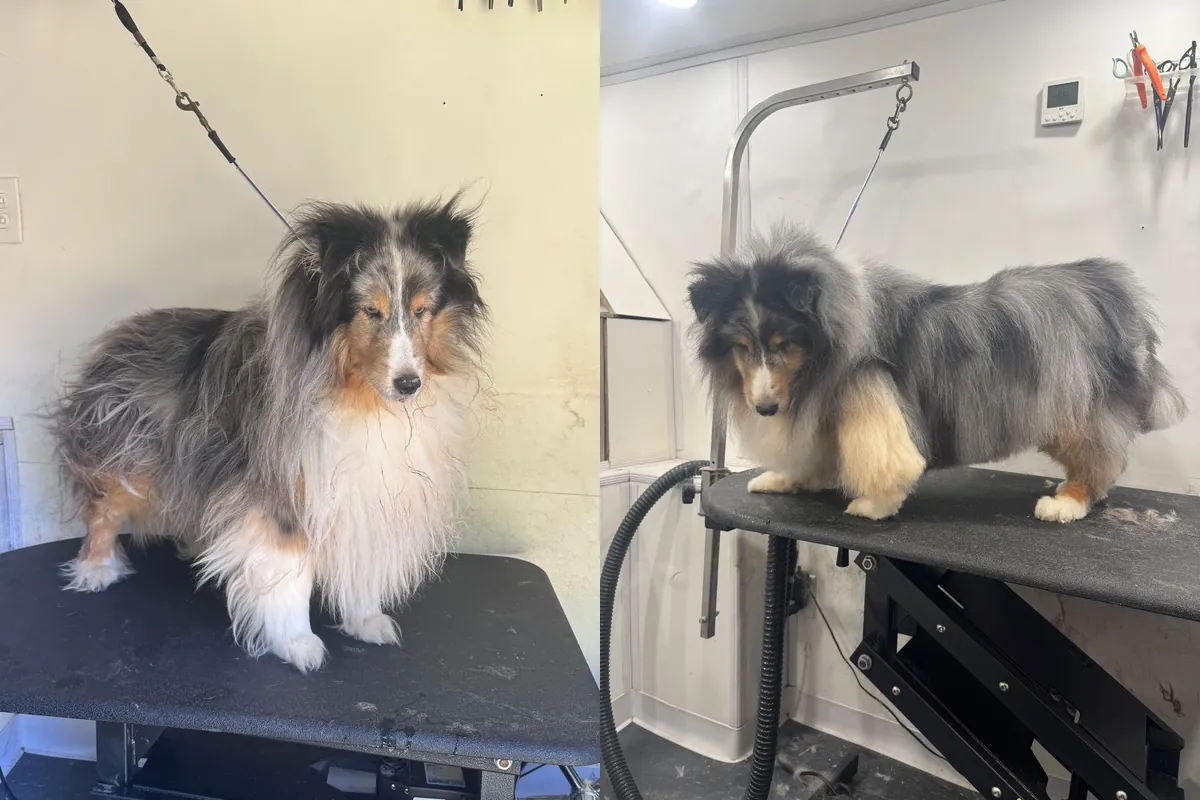
What helps a heavy shedder is taking out the loose undercoat while leaving the guard hairs alone. That is what de-shedding does, and the amount that comes out of one dog is usually a surprise:
The exception is a coat that has matted or packed so tightly that the skin underneath cannot dry. Dale Martins, a groomer quoted by the AKC who has worked on double-coated dogs for more than 40 years, says that is the situation where cutting the coat down makes sense. Brushing tight mats out would hurt, so a short clip is the kinder choice. We cover how that decision works on our dematting page.
Why do Bay Area double-coated dogs shed all year?
Because the climate is mild. Double coats evolved for cold places, where dogs drop the undercoat in big seasonal sheds. Where winters are gentle and summers are rarely extreme, many dogs never get a clear signal and shed a little all the time, with heavier bursts in spring and fall.
VCA veterinarians note that double-coated breeds often go through two heavy seasonal sheds a year, in late spring and late fall. The AKC adds, quoting Martins, that a dog in a colder place may shed its undercoat only in spring and fall, but could shed four times a year or all the time where temperatures are warmer. That second pattern describes a lot of dogs in San Francisco, on the Peninsula and down into the South Bay, which is why owners here often feel like shedding season never ends.
How do you brush a double coat at home?
Use a slicker brush through the whole coat, follow with a metal comb, and add an undercoat rake or shedding tool when the undercoat starts coming out in tufts. Work in sections so you reach the undercoat near the skin, use gentle strokes, and aim for at least once a week.
| Tool | What it does | When to use it |
|---|---|---|
| Slicker brush | Fine wire pins reach under the guard hairs and lift loose undercoat | Every session. The AKC suggests a soft slicker for puppies and a medium one for adults |
| Undercoat rake or shedding tool | Pulls out the dead undercoat in bulk | During heavy sheds. Pull with the direction of hair growth and do not press hard on bladed tools |
| Metal comb | Checks your work and finds small tangles | At the end. If it glides from skin to tip, that section is done |
A few technique notes, drawn from the AKC’s grooming guidance:
- Brush the hair, not the skin. Martins compares it to brushing your own hair. You want to reach the undercoat close to the skin with gentle strokes, not scrape the skin itself.
- Go section by section. Lift the top layer with one hand and brush the layer underneath. The AKC describes going over the coat until you are pulling less and less hair from the brush.
- Check the friction spots. Behind the ears, the collar line, the armpits, the back of the legs and the tail are where packed undercoat turns into mats first.
Our step-by-step guide to brushing between grooming appointments covers line brushing in more detail and works for double coats too.
How should you bathe and dry a double coat?
Bathe only when the dog is dirty or smelly, rinse until the water runs completely clear, and dry all the way down to the skin. A thick undercoat can feel dry on top while staying damp underneath for hours, and moisture held against the skin is what you want to avoid.
The AKC warns that bathing too often can deplete natural oils and dry out the skin and coat, and that leftover shampoo should be rinsed out completely. It also notes that a dog in a humid climate that is not brushed weekly can end up with an undercoat packed so tight it keeps moisture next to the skin. During the Bay Area rainy season, that is the real risk: a Golden or a Shepherd comes home from a wet walk, gets a quick towel, and the undercoat stays damp all evening. Towel firmly, then use a dryer on a cool setting, and brush once the coat is dry.
When is it time for professional de-shedding?
When brushing at home no longer keeps up: tufts of undercoat lifting off the back, hair drifting across the floor within a day of vacuuming, or a coat that feels thick and packed when you press into it. Booking de-shedding at the start of each heavy shed keeps it from turning into mats.
A professional de-shedding session removes in one visit the loose undercoat that would otherwise come out on your floors over the next few weeks. At Brush Hour it is available on its own from $80 or paired with a mobile dog bath, in our van parked at your home. Everything it includes is on the de-shedding page. If you are not sure your dog is due, our list of signs your dog needs grooming is a quick check.
Frequently asked questions
Does shaving a double-coated dog stop the shedding?
No. The American Kennel Club says shaving does not eliminate shedding; the dog keeps dropping undercoat, just shorter. It does damage the topcoat. Regular brushing and de-shedding remove the loose undercoat without cutting the protective guard hairs.
Why does a double coat look patchy after a shave?
Because the two layers do not grow back at the same speed. The AKC notes that the undercoat can grow back faster and crowd out the guard hairs, leaving a patchy coat that looks and feels different. VCA veterinarians describe a rare complication, post-clipping alopecia, that can delay regrowth for up to two years, especially in plush-coated breeds like Huskies and Pomeranians.
Is it ever OK to shave a double-coated dog?
Yes, when the coat is so matted or packed that the skin cannot dry, or when a veterinarian asks for it for medical reasons. In that case a short clip is kinder than brushing tight mats out. Talk it through with your groomer and your veterinarian first.
How often should I brush a double-coated dog?
At least once a week with a slicker brush and a comb, according to the AKC, and more often during heavy shedding. In the mild Bay Area climate, many double-coated dogs shed on and off all year, so a few short sessions a week is a realistic goal.
What breeds have a double coat?
Common examples from the AKC include Golden Retrievers, Labrador Retrievers, German Shepherd Dogs, Border Collies, Siberian Huskies, Shetland Sheepdogs, Pomeranians, Samoyeds and English Springer Spaniels. Double coats can be short, like a Labrador, or long, like a Collie.
Sources: American Kennel Club, “How to Groom a Double-Coated Dog” (updated November 19, 2024), “Is It OK to Shave Your Dog’s Coat in Summer?” (updated March 27, 2026), “When Brushing Your Shedding Dog, Use the Right Tool” and the Shetland Sheepdog breed page; VCA Animal Hospitals, “Grooming and Coat Care for Your Dog” (updated January 30, 2026). This guide is general information, not veterinary advice. If your dog has skin problems, bald patches or a coat that is not growing back, see your veterinarian.
Related: De-shedding at your door · How to brush your dog between grooms · How often to groom your dog