
Service
Dog de-shedding at your door
For double-coated dogs that leave hair on everything. Done in our van at your home.
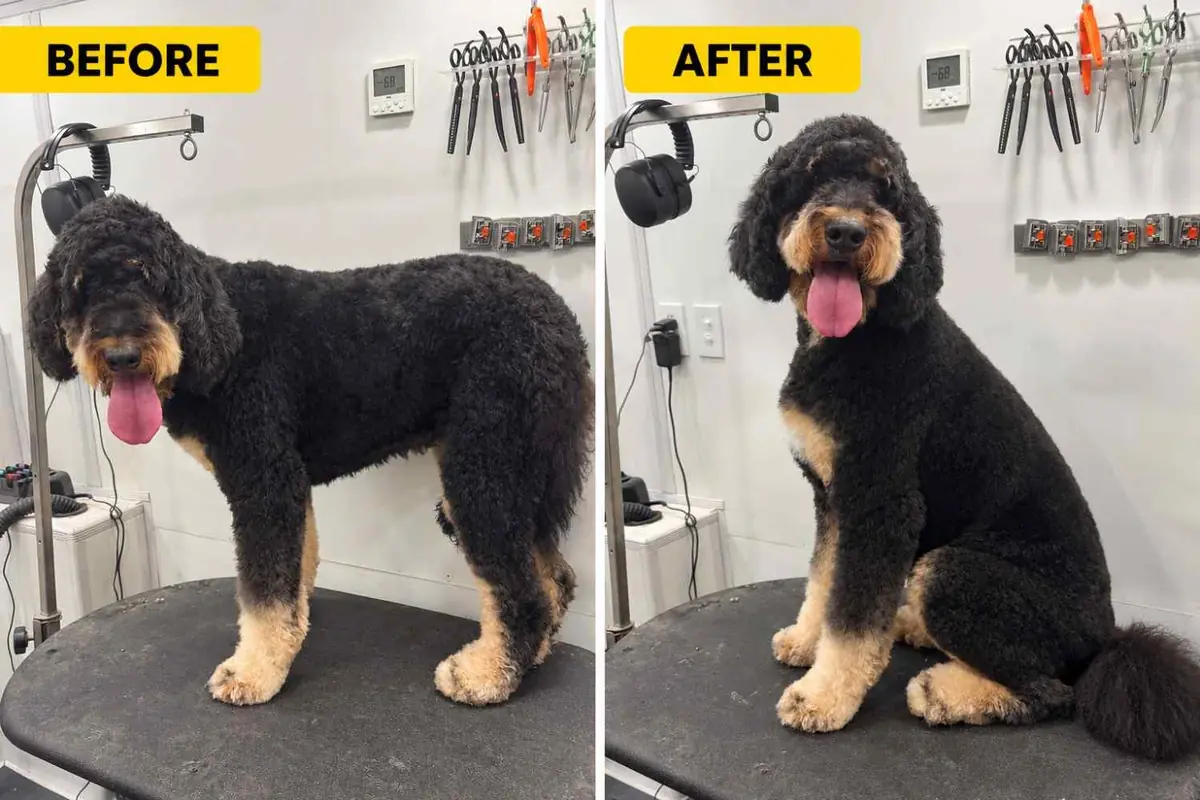
De-shedding removes the loose undercoat that double-coated dogs drop, so less of it ends up on your floors and furniture. Brush Hour offers it as a stand-alone visit from $80, done in our van at your door. Shaving does not stop shedding and, according to the American Kennel Club, damages the topcoat.
De-shedding price
| De-shedding (stand-alone visit) | from $80 |
New clients get $10 off the first visit. Your groomer confirms the final price with you before booking. See every price.
Why double-coated dogs shed so much
A double coat has two layers: a soft, dense undercoat for insulation and longer guard hairs on top. VCA veterinarians note these breeds often go through two heavy seasonal sheds a year. In a mild climate it can be more: the American Kennel Club notes that in warmer places a double-coated dog may shed four times a year or all the time, which describes a lot of Bay Area dogs.
De-shedding pulls that loose undercoat out in one session, in our van, instead of letting it come out on your floors, car seats and clothes over the next few weeks.
Why shaving is not the answer
It is tempting to shave a heavy shedder. The American Kennel Club is clear that shaving does not eliminate shedding and damages the topcoat. Its chief veterinary officer, Dr. Jerry Klein, warns that shaving a double-coated dog can make it susceptible to heat stroke, because the coat helps keep the dog cool in the heat as well as warm in the cold. The coat also protects the skin from sunburn, and dogs cool themselves mostly by panting, not through the skin.
There is also a regrowth risk. A rare condition called post-clipping alopecia, most common in Nordic breeds like Huskies, Malamutes and Samoyeds and also seen in Pomeranians, can leave shaved patches that take 6 to 24 months to grow back, according to a board-certified veterinary dermatologist.
Shaving still has a place when a coat is badly matted. That is a different job, covered on our dematting page.
Keeping the shedding down between visits
- Brush a few times a week during heavy shedding, all the way to the skin.
- Book de-shedding at the start of each big shed, or pair it with a bath.
- Watch for hair on everything: it is usually the first sign the undercoat is ready to come out.
Questions dog owners ask us
Should I shave my double-coated dog in summer?
Usually not. The American Kennel Club explains that the double coat helps keep a dog warm in the cold and cool in the heat, and its chief veterinary officer warns that shaving can make a dog susceptible to heat stroke. The coat also protects the skin from sunburn.
Will my dog’s coat grow back after shaving?
Usually, but not always quickly. Some double-coated dogs, most often Huskies, Malamutes, Samoyeds and Pomeranians, develop post-clipping alopecia, and a board-certified veterinary dermatologist reports regrowth can take 6 to 24 months.
Why is my dog shedding so much in the Bay Area?
Double-coated dogs often blow their coat twice a year, but the American Kennel Club notes that dogs in warmer places may shed four times a year or all the time. Our mild climate means many Bay Area dogs shed most of the year.
How often should a double-coated dog be de-shed?
It depends on the dog and the season. Booking it at the start of each heavy shed works well for many dogs. Brushing a few times a week at home keeps the undercoat moving between visits.
Which dogs have a double coat?
Common examples are Huskies, Samoyeds, Malamutes, German Shepherds, Golden Retrievers, Australian Shepherds and Pomeranians.
- American Kennel Club, How to Groom a Double-Coated Dog, November 2024
- American Kennel Club, Is It OK to Shave Your Dog’s Coat in Summer?, March 2026
- VCA Animal Hospitals, Grooming and Coat Care for Your Dog, updated January 2026
- Rosenbaum M., Focal, non-inflammatory alopecia: a diagnostic, treatment challenge, dvm360, 2001