Grooming at Home
How to Clean Muddy Dog Paws: A One-Minute Door Routine
- Set up the door station: a bowl or paw washer cup of lukewarm water and two towels, one for washing and one for drying.
- One paw at a time: dip or rinse, work between the toes and pads, then press dry. Dry between the toes, not just the bottom of the paw.
- Long pad hair is a mud sponge. A paw pad trim makes every wet walk easier; it comes with every Dog Bath.
- Licking that keeps going after the paws are clean and dry is a reason to see your veterinarian.
In this guide
This rainy season came in hard. ABC7 called the November 13, 2026 storm the first moderate storm of the season, and five days later San Francisco recorded 2.28 inches of rain by 3 p.m., the most for November 18 since 1918, according to the National Weather Service as reported by The San Francisco Standard. Every park and trail walk since has ended the same way: four muddy paws at the door.
Here is how to clean muddy dog paws quickly, what to use, why the hair between the pads matters so much in wet weather, and when paw licking is something more than a dog tidying up.
How do you clean muddy dog paws?
Rinse each paw in lukewarm water, work your fingers between the toes and pads to loosen the mud, then press the paw dry in a towel and dry between the toes. It takes about a minute per dog once your dog is used to it. Set everything up by the door before the walk, not after.
- Before you leave, put a bowl or paw washer cup of lukewarm water and two towels inside the door. A non-slip mat helps.
- Stop at the door. Ask for a sit or stand on the mat before your dog runs inside.
- One paw at a time. Dip the paw or pour water over it, and gently work your fingers between the toes and around the pads, where mud and grit collect.
- Press dry with the second towel. Wrap the paw and squeeze; do not scrub.
- Dry between the toes. Fold a corner of the towel and run it between each toe. This is the part most people skip.
- Check the legs and belly. The ASPCA’s cold weather advice is to wash and dry your dog’s feet and stomach after each walk.
Reward the whole routine with a treat. A dog that expects a snack at the door will offer its paws on its own after a few rainy weeks.
Water, wipes or a paw washer cup?
For real mud, water wins: wipes smear it around and leave the grit between the toes. A paw washer cup, a cup with soft bristles inside that you fill with water and dip the paw into, is a tidy way to do it. Wipes are fine for a light dusting on a dry day.
| Method | Best for | Watch out for |
|---|---|---|
| Bowl of water + towel | Any dog, any mud | Change the water between dogs |
| Paw washer cup | Small and medium dogs, daily use | Rinse and dry the cup so it does not get smelly |
| Pet wipes | Light dust, dry days, the car | They do not reach between the toes |
| Shower or tub rinse | Mud up to the belly | Dry the whole dog after, not just the feet |
Soap is rarely needed for mud. If you use it, choose a dog shampoo and rinse until the water runs clear; the AKC warns that leftover shampoo should be rinsed out completely. After a walk through standing water or street runoff, a rinse matters more, and our El Niño guide for dog owners explains why to keep your dog out of puddles in the first place.
Why does the hair between the paw pads matter?
Because long pad hair works like a sponge. On Doodles, Poodles, Shih Tzus, spaniels and other long or curly coats, the hair grows past the pads and between the toes, picks up mud and water on every walk, and stays wet long after the rest of the paw. Trimmed short, the paw rinses clean and dries in seconds.
That is why every Dog Bath at Brush Hour includes a paw pad hair trim, along with the nail trim. For a rounder, shaped foot on a Poodle or Doodle, Poodle feet is a +$20 add-on to any groom. Shorter feet also help in spring, when foxtails start to catch in long paw hair; our foxtail guide covers that season.
Nails are part of the same check. Our guide on how to trim dog nails shows how, or book a nail trim on its own.
When is paw licking a problem?
A few licks after a walk are normal. Licking or chewing that keeps going after the paws are clean and dry, or comes with redness, swelling, a bad smell, limping or brown saliva stains on the fur, is a reason to call your veterinarian. Paw problems are not something a groomer treats.
The American Kennel Club says the most common sign of pododermatitis, an inflammation of the paw skin, is persistent licking and chewing of the paws, and lists hair loss, thickened skin or pads, lameness and saliva staining among other signs. Its advice is plain: if your dog begins licking or chewing its paws excessively, contact your veterinarian promptly.
When does a muddy dog need a full bath?
When the mud has gone past the paws: up the legs, across the belly and into a thick or curly coat that will not dry with a towel. Mud left in a long coat keeps it damp at the skin and turns into tangles as it dries. That is the time for a real bath and a full dry.
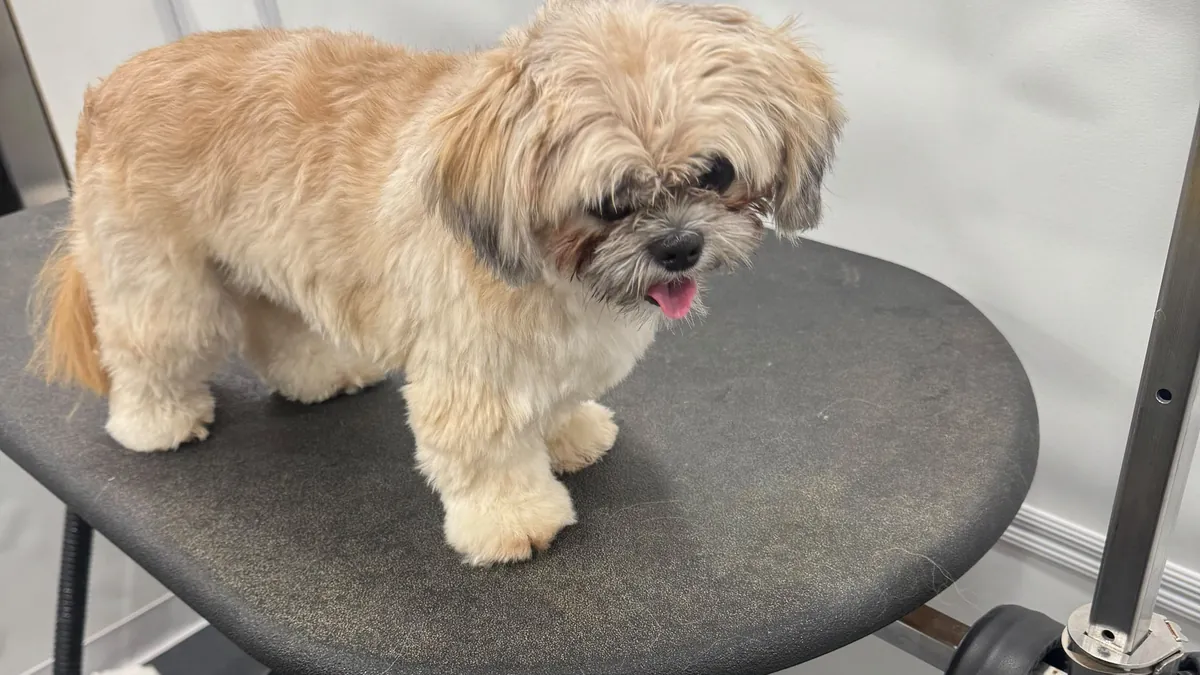
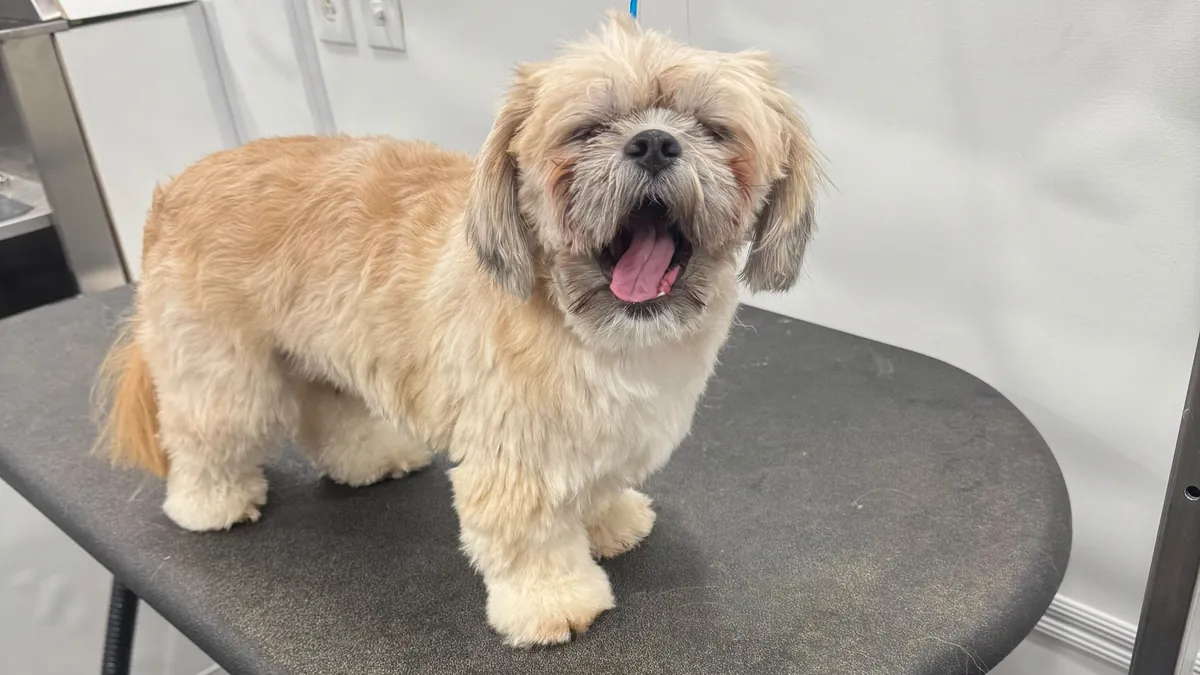
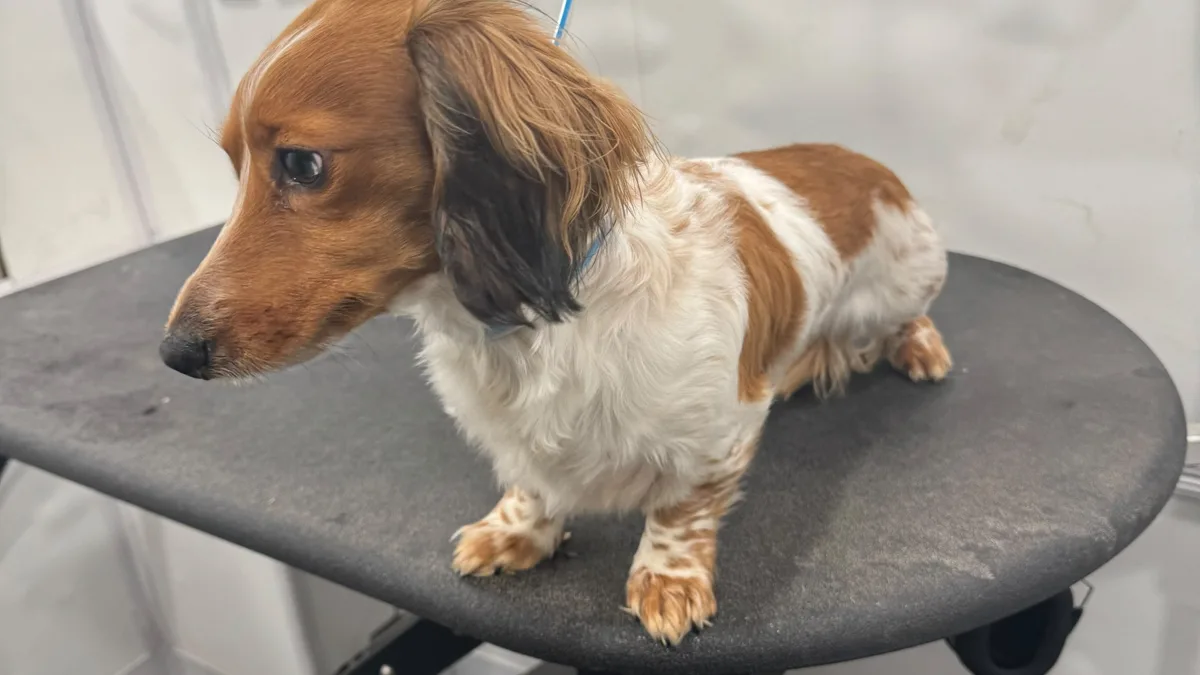
Brush Hour brings the bath to your door. We park our grooming van at your home across the Peninsula, San Francisco and the South Bay, and groom one dog at a time, with no cages, so the mud stays out of your bathroom. For curly coats that also need shaping, Full Grooming adds the haircut. Here is a day of dogs groomed in the van:
Frequently asked questions
What is the easiest way to clean muddy dog paws?
Keep a bowl or paw washer cup of lukewarm water and two towels by the door. Dip or rinse one paw at a time, work your fingers between the toes and pads, then press each paw dry in a towel and dry between the toes. Plain water handles most mud.
Can I use soap on my dog’s paws?
For mud, plain lukewarm water is usually enough. If the paws are greasy or smelly, a little dog shampoo works, as long as you rinse it all out, since leftover shampoo is something the AKC says to avoid. Skip household cleaners.
Why does my dog lick its paws after a walk?
A few licks to clean off mud are normal, and rinsing the paws stops your dog from licking off whatever it stepped in. The AKC says persistent licking or chewing of the paws is the most common sign of inflammation of the paw skin, so if it goes on, contact your veterinarian.
Should the hair between my dog’s paw pads be trimmed?
On long-coated and curly-coated dogs, a tidy trim of the hair around the pads makes the paws much easier to clean and dry, because long pad hair holds mud and water. At Brush Hour, a paw pad hair trim comes with every Dog Bath.
Sources: ABC7, Bay Area storm timeline (November 13, 2026); The San Francisco Standard, “Storm chaos: Atmospheric river causes flooding across San Francisco” (November 18, 2026), citing the National Weather Service; ASPCA, Cold Weather Safety Tips; American Kennel Club, “Pododermatitis in Dogs” (updated August 20, 2026) and “How to Groom a Double-Coated Dog”. This guide is general information, not veterinary advice. If your dog keeps licking its paws, limps, or has red, swollen or sore paws, see your veterinarian.
Related: Mobile dog bath at your door · El Niño guide for dog owners · Foxtails and Bay Area dogs