Rainy Season
Foxtails and Dogs: Signs, Season and How to Prevent Them
- Foxtails are grass seed heads covered in tiny barbs that grip in one direction, so they work into fur, skin, ears and noses instead of falling out.
- The SF SPCA says they grow in spring and summer. A UC Davis veterinarian says the western U.S., especially California, has the most.
- The most common place a foxtail burrows is between the toes. Ears, nose and eyes are other common spots.
- Signs: head shaking, sneezing, squinting, licking one paw, a red bump between the toes. Call your vet: foxtails in the ear, nose or eye need a veterinarian to remove.
- Prevention: avoid dry, overgrown grass, check your dog after every walk, and keep the hair short around the feet and ears.
In this guide
Every Bay Area dog owner learns about foxtails and dogs sooner or later, usually from a vet bill. A foxtail looks harmless, a fuzzy little seed head on a dry grass stem, but it is built to travel in one direction and it does not stop at the fur. Here is what foxtails are, when they show up around the Bay, the signs that one has gone somewhere it should not, and how grooming helps you stay ahead of them.
What is a foxtail and why is it dangerous for dogs?
A foxtail is the seed head of several wild grasses, shaped like a fox’s tail. Its tiny barbs grip in one direction, so once it catches in fur it tends to work its way in rather than drop off: into the skin between the toes, the ear canal, the nose or around the eye.
Erik Olstad, a veterinarian and assistant professor of clinical veterinary medicine at UC Davis, explains that a foxtail is not one plant but a type of grass seed pod, and that the western United States, especially California, has the most of them. The surface is covered in small sticky hairs: rub it one way and it is smooth, the other way and it grabs. A foxtail that works into the skin can carry bacteria with it and leave a path of infection, and in rare cases a dog can inhale one deep into the lungs, which he describes as one of the most serious places a foxtail can go.
Ripgut brome is one of the common culprits in California. The University of California’s Integrated Pest Management program describes its awns as 1 to 2 inches long, with tiny, rough teeth that can injure livestock and pets.
When is foxtail season in the Bay Area?
Spring and summer. The San Francisco SPCA says foxtails tend to grow during those seasons, and Dr. Olstad, who works in California’s Central Valley, calls them a daily issue especially in the spring and summer months. UC IPM classifies ripgut brome as a cool-season annual grass.
That makes late fall and winter the quiet time to plan. If your dog has long, feathered feet or ears, set up a regular trim schedule now, so you are not scrambling for an appointment when the first foxtail turns up in spring.
Where do foxtails get stuck on a dog?
Between the toes is the most common spot, according to Dr. Olstad. The ears, nose and eyes are the other usual places, and the SF SPCA adds the mouth. Long, feathered or curly hair on the feet and ears gives foxtails more places to catch.
| Where | Signs to watch for | What to do |
|---|---|---|
| Paw, between the toes | Chewing or licking one paw, redness, swelling, a small pimple-like bump between the toes | Call your vet. Do not squeeze or dig. |
| Ear | Frequent head shaking or scratching at one ear | Vet visit. Ear foxtails need a veterinarian to remove. |
| Nose | Sneezing, pawing at the nose | Vet visit the same day if you can. |
| Eye | Squinting, rubbing the eye, discharge | Vet visit. Do not try to remove it yourself. |
| Throat or chest | Coughing, gagging, hacking | Vet visit. Dr. Olstad warns these cases can turn serious. |
Dr. Olstad notes that foxtails in the ear canal, eyes or nose need to be removed by a veterinarian. If you see a foxtail lying loose on top of the coat, brush it out. If it is already under the skin or inside an ear, leave it for your vet.
How can I prevent foxtails on my dog?
Avoid dry, overgrown grass, check your dog after every walk and keep the hair short around the feet and ears. The SF SPCA recommends all three, and Dr. Olstad adds that regular grooming and removing mats can help you catch foxtails before they burrow into the skin.
- Pick your route. Stay in the middle of the trail and skip vacant lots and fields of tall, tan grass. Do not let your dog run through them.
- Check after every walk. Spread the toes and look between the pads. Lift the ear flaps. Run your hands over the chest, armpits, belly and tail.
- Brush the coat. A quick comb-through after a hike catches foxtails sitting on the fur. Our guide to brushing between grooming appointments shows how to reach the skin.
- Keep feet and ears short in spring and summer. The SF SPCA suggests keeping your dog’s fur short during those months, especially around the feet.
- Consider gear on high-risk hikes. Dr. Olstad mentions mesh head covers and dog boots as options.
Which dogs are most at risk from foxtails?
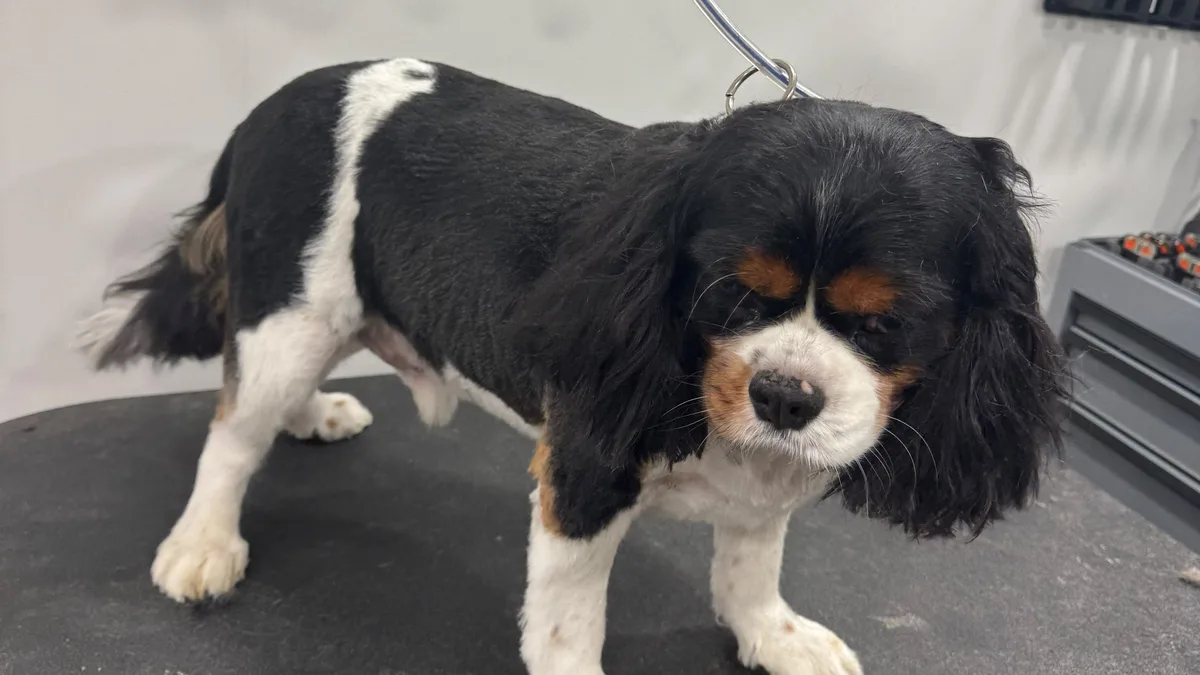
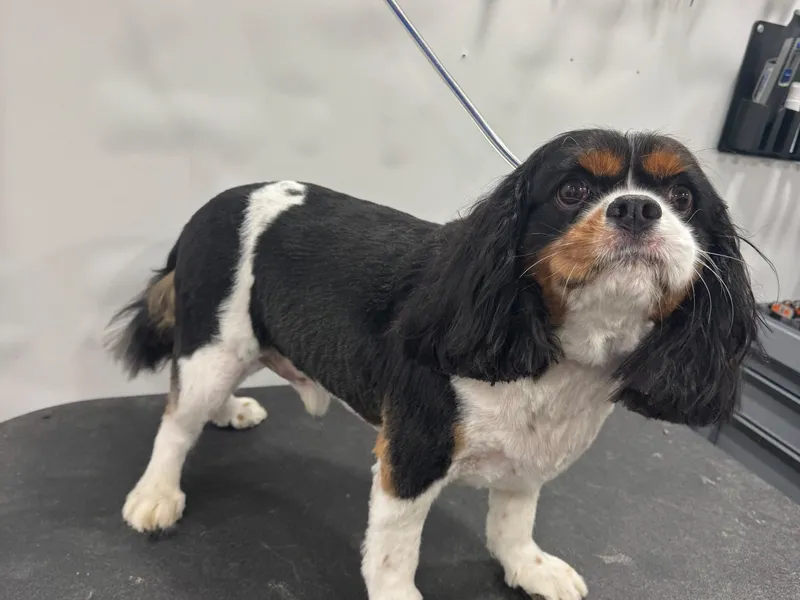
Any dog that walks through dry grass, but especially dogs with long, feathered or curly hair on the feet and ears, such as many spaniels, Doodles and Golden Retrievers. Dr. Olstad notes that dogs can inhale foxtails while running through fields and breathing hard, so field runners are at risk too.
Drop ears matter too. A foxtail that lands under a long ear flap is out of sight until your dog starts shaking its head. If your dog has long ears, lift them and look after every walk in foxtail season.
How does grooming help with foxtails?
Shorter hair gives foxtails fewer places to catch and makes them easier to see. A groom also means a professional looks at your dog’s feet, ears and coat up close. It does not replace a vet: a groomer can brush out a foxtail sitting on the coat, but one buried in the skin or ear is a veterinary job.
Brush Hour grooms at your door, one dog at a time, with no cages. Every Dog Bath includes a paw pad hair trim, a sanitary trim, ear cleaning and a full blow dry. With Full Grooming, you also get a breed-specific haircut, so you can ask for short feet and a tidier trim around the ears for spring and summer. See prices by size on our pricing page.
Frequently asked questions
When is foxtail season in the Bay Area?
The San Francisco SPCA says foxtails tend to grow during the spring and summer, and a UC Davis veterinarian describes them as a daily issue in California in those months. Check your dog after every walk from spring through the end of summer, and stay alert in dry, grassy fields any time of year.
What are the signs of a foxtail in a dog?
Head shaking or pawing at an ear, sneezing or pawing at the nose, squinting or a watery eye, licking or chewing one paw, and a red, swollen bump between the toes. Any of these after a walk through dry grass is a reason to call your veterinarian.
Can I pull a foxtail out myself?
Only if it is loose on top of the coat. A foxtail in the ear canal, eye or nose needs to be removed by a veterinarian, and one that has gone into the skin needs a vet visit too. Do not dig for it at home.
What is a foxtail cut?
The SF SPCA notes that some groomers offer a “foxtail cut,” which keeps the hair short, especially around the feet, during spring and summer. At Brush Hour, ask for short feet and a tidy trim around the ears with Full Grooming.
Does a groomer remove foxtails?
A groomer can brush out foxtails caught on the coat and may spot one during the groom. A foxtail embedded in the skin, ear, nose or eye is a veterinary job.
Sources: San Francisco SPCA, “Protecting Your Pet From Foxtails” (May 28, 2026); Erik Olstad, DVM, University of California, Davis, “Pet-owners: watch out for foxtail seed pods that can harm your dog or cat this summer,” The Conversation (May 9, 2024); University of California Statewide Integrated Pest Management Program, weed gallery: ripgut brome. This guide is general information, not veterinary advice. If you think your dog has a foxtail in its skin, ear, nose, eye or throat, see your veterinarian.
Related: Full grooming at your door · Brushing between grooming appointments · How to clean your dog’s ears