Grooming at Home
How to Clean Your Dog’s Ears: A Vet-Backed Guide for Home Care
- Most dogs benefit from an ear check and cleaning about once a month, according to the AKC. More often is not better: VCA veterinarians warn that over-cleaning can irritate the ear canal.
- Use a dog ear cleaner, cotton balls or gauze, and treats. Never use cotton swabs inside the ear.
- Fill the canal with cleaner, massage the base of the ear, let your dog shake, then wipe what you can see.
- Dry the ears after every bath, swim or rainy walk. Trapped moisture is a common setup for ear trouble.
- Red, swollen, smelly, painful or itchy ears are not a cleaning job. See your veterinarian first.
In this guide
Learning how to clean dog ears is mostly about knowing when to stop. A gentle cleaning of a healthy ear takes two minutes and a few treats. Poking deep with a cotton swab, or scrubbing an ear that is already sore, can make things worse. This guide walks through the vet-recommended method, how often to do it, how to keep ears dry through a wet Bay Area winter, and the warning signs that mean your dog should see a veterinarian instead.
Why do dogs need their ears cleaned?
A dog’s ear canal runs down and then turns sideways toward the eardrum, so wax and debris do not fall out easily. VCA veterinarians explain that material trapped deep in that horizontal part of the canal can cause itchiness and infections, which is why ear cleaning is part of routine grooming.
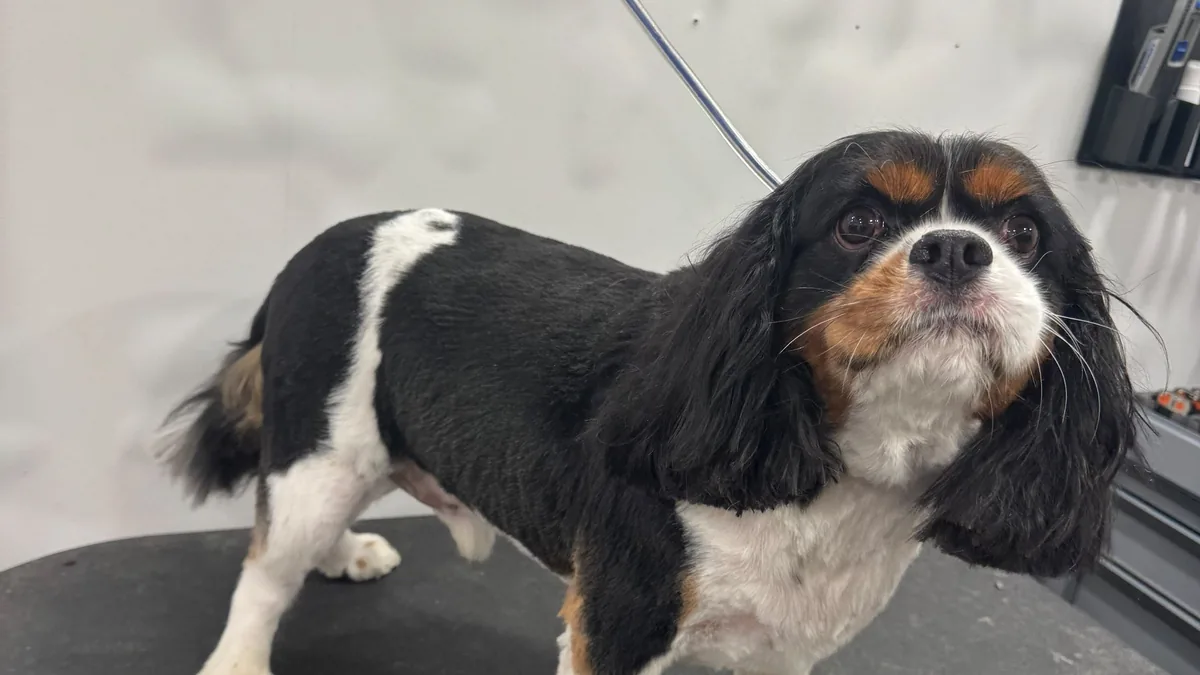
Some dogs need more attention than others. The Merck Veterinary Manual notes that the shape of the ear flap or ear canal can make some dogs more likely to develop outer ear inflammation. If your dog has long, heavy ears, like a Cavalier, Cocker Spaniel, Basset Hound or Doodle, it is worth checking them more often than you would upright ears.
How often should you clean your dog’s ears?
For most dogs, about once a month, plus after baths and swims. The AKC says most dogs benefit from monthly ear cleaning and some need it more often. But cleaning too much can irritate the ear canal, so a healthy, clean, odor-free ear can simply be checked and left alone.
VCA veterinarians put it this way: over-cleaning may cause irritation in the ear canal, which can lead to infection, and your veterinarian can help you decide how often your dog’s ears should be cleaned. A quick weekly look is a good habit. Healthy ears are pale pink with a little light wax and no strong smell.
What do you need to clean a dog’s ears?
Three things: a good dog ear cleaning solution, cotton balls or gauze, and treats. That is the full list VCA veterinarians give. Skip cotton swabs, homemade vinegar mixes and human wax removers, all of which can push debris deeper or irritate the canal.
- Ear cleaner made for dogs. The Merck Veterinary Manual suggests using one your veterinarian recommends and avoiding over-the-counter wax removers unless your vet approves.
- Real cotton balls or gauze. Merck specifies real cotton rather than synthetic.
- Small, high-value treats for before, during and after.
- A towel. Your dog will shake, and the cleaner will fly.
How do you clean a dog’s ears, step by step?
Fill the ear canal with cleaner, massage the base of the ear for about 30 seconds, let your dog shake, then wipe the inner ear flap and the opening of the canal with cotton or gauze. Repeat on the other side. Clean only what you can see, and stop if your dog shows pain.
This method follows the instructions from VCA Animal Hospitals and the Merck Veterinary Manual:
- Check first. Look and smell. If the ear is red, swollen, has discharge, smells strongly or your dog flinches, stop here and call your veterinarian.
- Lift the ear flap gently up and away from the head so you can see the opening of the canal.
- Fill the canal with cleaner. VCA says to use enough to completely fill it. Do not touch the tip of the bottle to the ear.
- Massage the base of the ear for about 30 seconds. You should hear a soft squishing sound as the cleaner loosens wax.
- Step back and let your dog shake. This brings the loosened debris up to where you can reach it.
- Wipe what you can see on the inner ear flap and the upper canal with cotton or gauze. Never push anything down into the canal.
- Reward, then repeat on the other ear with fresh cotton.
If your veterinarian has prescribed ear medication, VCA advises cleaning first and applying the medication after. If your dog seems to be in pain at any point, stop and consult your veterinarian.
What should you never put in a dog’s ear?
Cotton swabs, fingers wrapped in tissue, or anything else that goes down into the canal. VCA veterinarians warn that cotton-tipped applicators risk puncturing the eardrum, and the Merck Veterinary Manual says not to use anything that pushes debris deeper. Also skip vinegar mixtures and other irritating home remedies.
Hair inside the ear is a common question. Merck notes that trimming or plucking hair near the ear canal can improve airflow for some dogs, but advises talking to your veterinarian before removing hair. That is a decision for your vet, not something to try at home on a dog with healthy ears.
How do you keep ears dry in a rainy Bay Area winter?
Dry the outer ear and the opening of the canal with a towel or cotton after every bath, swim, beach day and soaking walk. VCA veterinarians say to always dry your dog’s ears after swimming or bathing, and Merck advises keeping ear canals dry and well ventilated.
The AKC adds that moisture trapped in the ears after swimming or bathing can contribute to ear problems. In practice that means a quick ear dry after a run at Ocean Beach or Fort Funston, after the rainy-day walks that come with the Bay Area winter, and after any bath at home. Merck also recommends keeping water out of the ears during bathing, which is easier if you wash the head last with a damp cloth. Dogs that swim often may need a drying agent; ask your veterinarian which one.
When is it a vet problem, not a cleaning problem?
When you see head shaking, scratching at the ear, a foul odor, redness, swelling, discharge or scaly skin, or when your dog is sensitive to touch around the ear. The Merck Veterinary Manual lists these as signs of outer ear infection and says prompt veterinary attention is needed when changes appear.
Cleaning an infected ear at home can be painful and can delay treatment. VCA veterinarians note that redness or pain can signal an infection or even a ruptured eardrum, and advise consulting your vet before cleaning ears that are red, inflamed or painful. A groomer can tell you what they noticed during the visit, but only a veterinarian can diagnose and treat an ear.
Does Brush Hour clean ears during a groom?
Yes. Ear cleaning is included in every Dog Bath, Full Grooming and VIP Package, along with the full blow dry that keeps moisture out of the coat. If your dog only needs the ears done, ear cleaning is also a stand-alone visit for $50, in our van at your door.
See everything included on the mobile dog bath page or all prices on the pricing page. When you book, tell us if your dog has touchy ears so we can plan around it. For the rest of the home routine, see our guide to grooming your dog at home, and if handling is a struggle, our tips for grooming an anxious dog help with ears too.
Frequently asked questions
How often should I clean my dog’s ears?
The AKC says most dogs benefit from ear cleaning about once a month, and some need it more often. VCA veterinarians warn that over-cleaning can irritate the ear canal, so clean when the ears look dirty or after swimming and bathing, and ask your veterinarian for the right schedule if your dog is prone to ear problems.
Can I use Q-tips to clean my dog’s ears?
No. VCA veterinarians say not to use cotton-tipped applicators because of the risk of puncturing the eardrum, and the Merck Veterinary Manual says not to use anything that pushes debris deeper into the canal. Use cotton balls or gauze on the parts of the ear you can see.
What should I use to clean my dog’s ears?
A dog ear cleaner your veterinarian recommends, plus cotton balls or gauze and some treats. The Merck Veterinary Manual advises against irritating home remedies such as vinegar mixtures and against over-the-counter wax removers unless your veterinarian approves.
Why does my dog’s ear smell bad?
A strong or yeasty smell can be a sign of an ear infection, especially with redness, discharge, head shaking or scratching. That needs a veterinarian, not a cleaning at home. VCA veterinarians advise seeing your vet before cleaning ears that are red, inflamed or painful.
Does a grooming appointment include ear cleaning?
At Brush Hour, yes. Ear cleaning is part of every Dog Bath and every grooming package, and it is also available as a stand-alone visit. Grooming is not a medical exam, so ear problems still need your veterinarian.
Sources: VCA Animal Hospitals, “Instructions for Ear Cleaning in Dogs” (Malcolm Weir, DVM, and Amy Panning, DVM, updated August 20, 2025) and “Prevent swimmer’s ear”; Merck Veterinary Manual, “Ear Infections and Otitis Externa in Dogs” (Nick Roman, DVM, reviewed April 2026) and “How to Clean Your Dog’s Ears”; American Kennel Club, “Dog Grooming at Home: Brushing, Bathing, and Nail Care” (updated September 2, 2026). This guide is general information for healthy ears, not veterinary advice. If your dog’s ears are red, painful, smelly or itchy, see your veterinarian.
Related: Mobile dog bath with ear cleaning · Dog grooming at home · How to brush your dog between grooms