Grooming at Home
Anxious Dog Grooming: Why Dogs Fear the Groomer and What Helps
- Many dogs find grooming stressful. In a 2022 study of pet shop grooming, stress signs peaked on arrival and during drying, and waiting cages kept dogs close to unfamiliar animals.
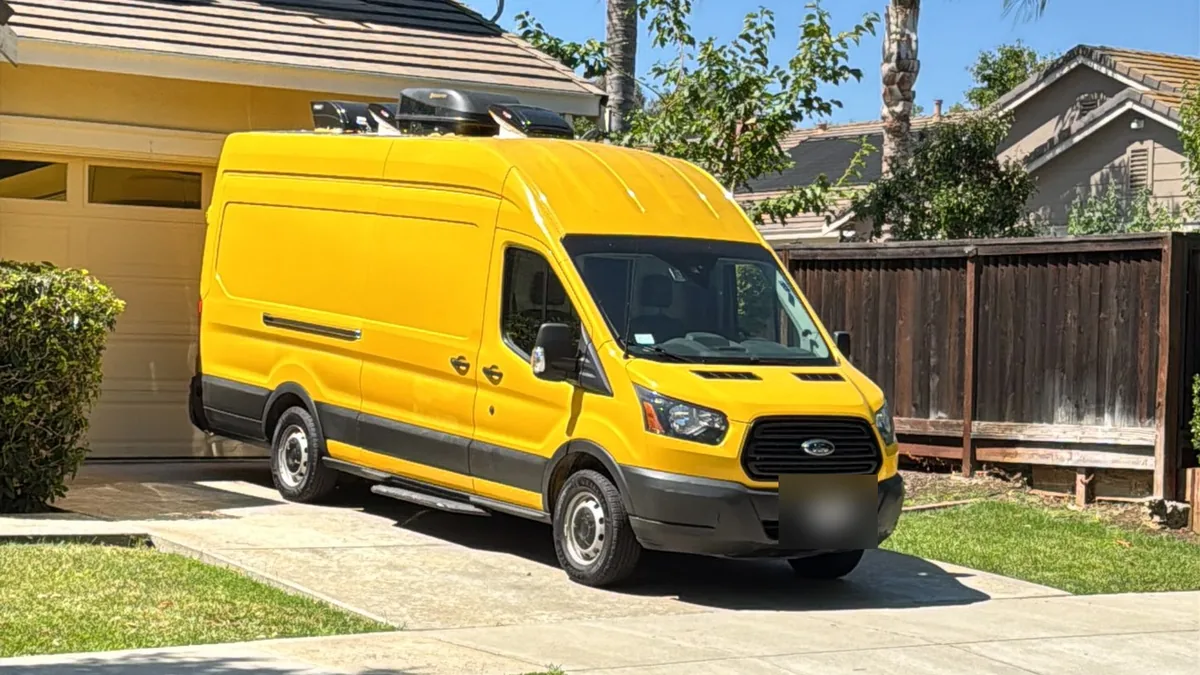
- Mobile grooming removes several triggers at once: no car ride, no waiting room and no other dogs. At Brush Hour, one groomer works with one dog in our van at your door, with no cages.
- At home, practice short, rewarded handling of paws, ears and face, a minute or two at a time.
- Learn your dog’s stress signals: moving or leaning away, yawning, ears back, tucked tail.
- Medication or sedation is a veterinarian’s call. For anything specific about your dog, ask us when you book.
In this guide
Anxious dog grooming is one of the most common worries we hear from owners. The dog who hides when the leash comes out, shakes in the car, or comes home from the salon exhausted is not being dramatic. Grooming asks a lot of a dog: strangers, noise, water, a loud dryer and hands on paws and ears. This guide explains what research says actually stresses dogs during a groom, why a one-on-one groom in a van at home helps many of them, and what you can do at home to make every appointment easier.
Why do so many dogs get anxious at the groomer?
Because grooming combines several things dogs find hard: a car ride, a new place, loud noise, restraint on a table and handling of sensitive spots like paws and ears. Many dogs also wait near unfamiliar dogs. A dog with one bad experience often remembers it at the next visit.
Research backs this up. In a peer-reviewed study of 55 grooming sessions at a pet shop, published in the Revista Brasileira de Zootecnia in 2022, Ferreira and colleagues found that changes in dogs’ behavior and physiology appeared mainly on arrival and during drying. Noise in the grooming room averaged about 78 decibels, and the authors noted that the waiting cages force dogs to be close to unknown animals. Their conclusion: priority must be given to the welfare of dogs during every stage of the process.
Handling on a table is a stressor in its own right. In a study of dogs at veterinary exams published in The Veterinary Journal, 78.5% of 135 dogs were classed as fearful, especially on the exam table, and dogs with a past negative experience were more fearful. That was a vet visit, not a groom, but the table, the restraint and the stranger are much the same.
How does one-on-one mobile grooming help an anxious dog?
It takes away the triggers that happen before the groom even starts. There is no car ride, no busy lobby, no wait in a crate and no other dogs barking nearby. Your dog walks a few steps from your door into a quiet van, and one groomer works only with them from start to finish.
Here is what that means at Brush Hour specifically:
- The van comes to your home. We park our grooming van at your door, so your dog skips the drive and the unfamiliar building.
- One groomer, one dog. The van holds one dog at a time, with no waiting room and no other dogs. If you have two dogs, they are groomed one after the other.
- No cages. Your dog is never crated while waiting for a turn, because there is no turn to wait for.
- We plan around sensitivities. When we confirm the appointment, tell us about touchy paws, ears, a fear of dryers or anything else that worries your dog.
It does not make every dog calm. Some dogs still need patience, breaks or help from their veterinarian. But removing the arrival stress and the strange dogs is a real head start. For a broader comparison, see our guide to mobile dog grooming vs a salon.
What are the signs your dog is stressed?
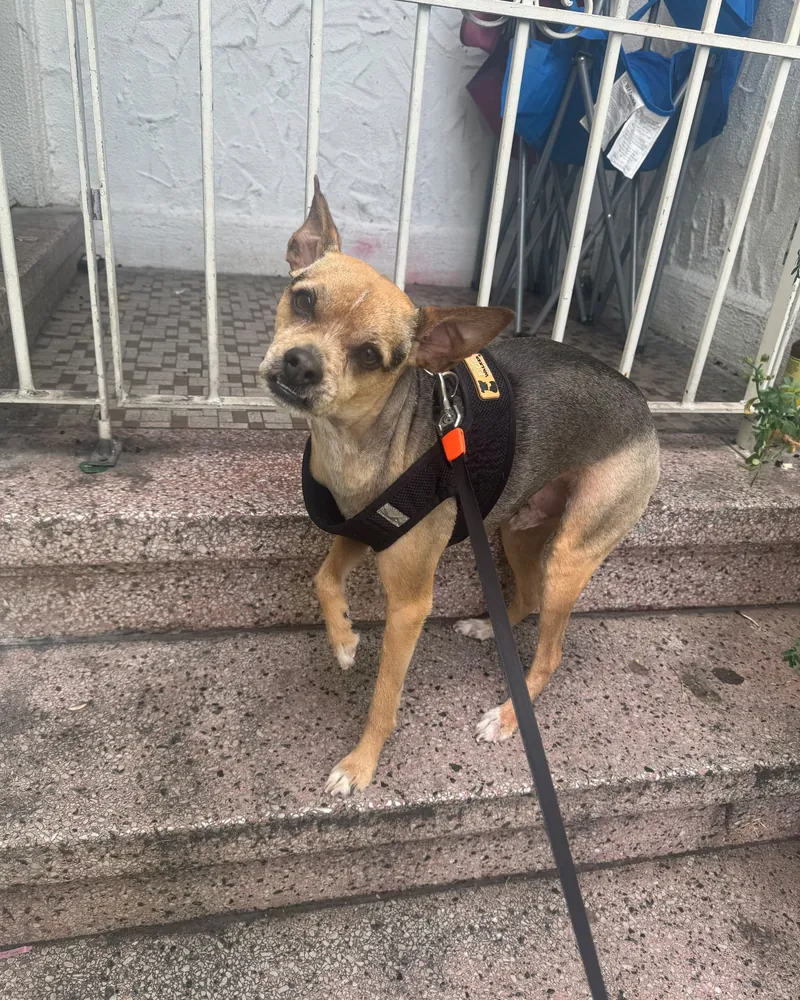
Look for moving away, looking away, leaning away, yawning, ears folded back and a tucked tail. These are the signals VCA veterinarians list for dogs uncomfortable with handling. Panting when not hot, trembling, lip licking and trying to leave are common too. Earlier signs are easier to work with than a growl.
Knowing these signals helps in two ways. At home, it tells you when to end a practice session before your dog gets overwhelmed. And when you book, it lets you describe your dog accurately: “he yawns and turns away when you touch his back feet” is much more useful to a groomer than “he’s a little nervous.”
How can you prepare an anxious dog for grooming at home?
Practice short, positive handling sessions a few days a week. Touch a paw, an ear or the muzzle for a second, give a small treat, and stop. Build up slowly over weeks. The aim is for touch to predict something good, so the groomer’s hands feel familiar instead of threatening.
VCA veterinarians, including a board-certified veterinary behaviorist, describe this approach for nail trims: start very small, pair each touch with a tiny, delicious treat, keep sessions to a minute or two, a few days a week, and do not rush or force it. The same plan works for the rest of the groom:
- Paws: hold a foot, then touch the nails, then tap a nail with the clipper without cutting. Our nail trimming guide has the full sequence.
- Ears and face: lift an ear flap, touch around the eyes and muzzle, reward each time.
- Brushing: a few strokes on an easy spot like the back, then a treat. Our guide to brushing between grooms explains how to reach the skin gently.
- Sound: some dogs fear the dryer. Running a hair dryer on low in another room while you give treats can help some dogs get used to the noise.
- Standing still: reward your dog for standing calmly on a non-slip mat for a few seconds at a time.
What helps on grooming day?
A tired, relaxed dog handles grooming better than a wound-up one. Give your dog a walk and a potty break beforehand, keep your own goodbye calm and brief, and have their favorite treats ready. Tell the groomer what you have practiced and what your dog dislikes most.
- Walk first. A sniff-heavy walk before the appointment takes the edge off.
- Keep it low-key. Dogs read our tension. A cheerful, normal goodbye helps more than a long, worried one.
- Keep the coat in good shape between visits. A matted coat makes for a longer, less comfortable groom, so regular brushing and a steady schedule make every appointment shorter and easier.
- Share the details. Past bad experiences, sensitive spots and anything your vet has told you are all useful.
When should you talk to your veterinarian?
When fear is intense, when your dog has bitten or tried to bite during handling, or when anxiety is getting worse over time. Pain can also look like fear, especially in older dogs. Your veterinarian can rule out a medical cause and discuss whether medication could help.
VCA veterinarians note that in some cases medication for anxiety or mild sedation may be beneficial for handling. That is a medical decision that depends on your dog’s health, and only your veterinarian can make it. If your dog has a history of biting or severe fear during grooming, please tell us when you book so we can talk it through honestly before the appointment. The Brush Hour FAQ covers how appointments work, and the full grooming page lists everything a groom includes.
Frequently asked questions
Why is my dog so scared of the groomer?
Grooming stacks several common stressors: a car ride, a noisy room, strangers handling paws and ears, a loud dryer and often a wait near unfamiliar dogs. A 2022 study of pet shop grooming found stress signs peaked on arrival and during drying. A past bad experience can also make the next visit harder.
Is mobile grooming better for anxious dogs?
It is often a good fit. With mobile grooming there is no car ride, no waiting room and no other dogs nearby. At Brush Hour, one groomer works with one dog in our van parked at your home, without cages. Every dog is different, so tell us about your dog’s triggers when you book.
How can I calm my dog before a grooming appointment?
Give your dog a walk and a chance to go potty beforehand, keep your own greeting low-key, and bring the treats your dog loves most. In the weeks before, practice short, rewarded handling of paws, ears and face at home so touch feels normal.
Should my anxious dog be sedated for grooming?
Only your veterinarian can decide that. VCA veterinarians note that anti-anxiety medication or mild sedation can help some dogs with handling, but it is a medical decision that depends on your dog’s health. If your dog has a history of severe fear during grooming, talk to your vet before the appointment.
What are the signs a dog is stressed during grooming?
VCA veterinarians list moving away, looking away, leaning away, yawning, folding the ears back and a tucked tail as signs a dog is uncomfortable. Panting, trembling, lip licking and trying to leave are also common. Those are signals to slow down and take a break.
Sources: Ferreira M. et al., “Stress in dogs during grooming in a pet shop,” Revista Brasileira de Zootecnia 51 (2022); Döring D. et al., “Fear-related behaviour of dogs in veterinary practice,” The Veterinary Journal 182(1) (2009); VCA Animal Hospitals, “Taking the Stress out of Nail Trimming for Dogs” (Ellen Lindell, VMD, DACVB, and others, updated September 12, 2025). This guide is general information, not veterinary or behavior advice. For severe fear or aggression, see your veterinarian or a veterinary behaviorist.
Related: Full grooming at your door · Senior dog grooming · How mobile dog grooming works