Grooming Costs
Mobile Dog Grooming vs Salon: Which Is Better for Your Dog?
- A salon usually costs less and often has more open slots. Mobile grooming is usually a little more expensive, because one van can only groom one dog at a time.
- Mobile wins on stress and time: no car ride, no waiting area with other dogs, no drop-off and pick-up. A study of salon grooming found dogs were most stressed on arrival and during drying.
- A salon can be the better pick for a relaxed, social dog, a tight budget, or a home where a van has nowhere to park.
- Anxious dogs, seniors, big dogs that hate the car and multi-dog homes tend to get the most out of mobile grooming.
In this guide
Mobile dog grooming vs a salon is not a question with one right answer. Both can give your dog a great bath and haircut. The difference is in everything around the groom: the drive, the wait, the noise, the price and how your day goes. As mobile groomers in San Francisco and the Peninsula, we obviously like the van, but salons do some things better, and you should know which ones before you choose.
Is mobile dog grooming better than a salon?
Mobile grooming is better for dogs that get stressed by car rides, crates, noise or other dogs, and for owners who want their time back. A salon is often better for relaxed, social dogs and for tighter budgets, since salons usually charge less and have more openings. The groom itself can be just as good in either place.
Mobile grooming vs salon, side by side
| Grooming salon | Mobile grooming van | |
|---|---|---|
| Price | Usually lower | Usually a little higher (van, fuel, one dog at a time) |
| Openings | Often more slots, since several groomers work at once | Fewer slots per day, so book ahead |
| Getting there | Drive there, drop off, drive back to pick up | The van parks at your home |
| Waiting | Dogs usually wait in a crate between steps | No waiting area; the dog comes in when it is their turn |
| Other dogs | Shared room, barking and dryers nearby | One dog in the van at a time |
| Who grooms | Sometimes split between a bather and a groomer | Usually one groomer from start to finish |
| What you need | A car and time for two trips | A spot near your door where the van can park |
Want the step-by-step version of a mobile visit, from request to van? See how mobile dog grooming works.
Where a grooming salon has the edge
A salon is usually cheaper, easier to book on short notice and does not need a parking spot at your home. If your dog loves people, rides happily in the car and does not mind other dogs, a good salon is a perfectly good choice.
- Price. In a NerdWallet guide to grooming costs, groomer Erin Myers says people should expect mobile grooming to be “a little bit more expensive,” to cover the vehicle, fuel, permits, equipment and the fact that a mobile groomer can usually care for only one dog at a time.
- Availability. A salon with several groomers can fit in more dogs per day, so it is often easier to get a same-week appointment.
- Drop-off flexibility. You can leave your dog and run errands, which some owners prefer to being home for the visit.
- No parking needed at home. On some San Francisco blocks a large van has nowhere to stop. A salon takes that problem away.
Where mobile grooming has the edge
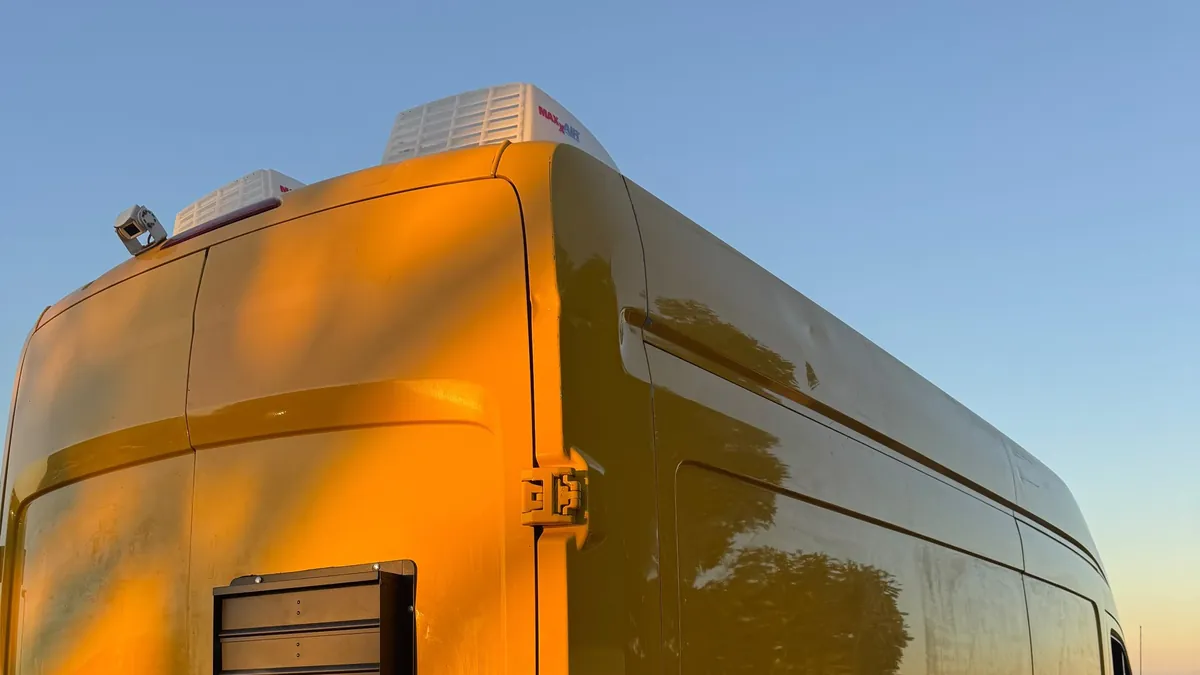
Mobile grooming removes the parts of a salon visit that stress many dogs: the car ride, the busy room, the crate time and the noise of other dogs and dryers. You also skip two trips across town, which matters when a round trip in Bay Area traffic can eat an afternoon.
Research backs up the stress part. In a peer-reviewed 2022 study of 55 grooming sessions at a pet shop, Ferreira and colleagues found that dogs’ stress signs showed up mainly on arrival and during drying. Noise in the grooming room averaged about 78 decibels, and waiting cages kept dogs close to animals they did not know. A van does not make drying silent, but it does take away the arrival rush and the room full of strangers.
The American Kennel Club’s checklist for choosing a groomer even includes the question “How will my dog be housed?”, because at most salons dogs wait in crates between the bath, the dryer and the table. In a mobile van, there is nobody else to wait behind.
Why is mobile dog grooming more expensive?
Mobile grooming costs more mainly because a van grooms one dog at a time and has running costs a salon does not: the vehicle, fuel, maintenance and the drive between homes. In exchange you get one-on-one attention and no travel time of your own. The gap is often smaller than people expect once you count your time and gas.
At Brush Hour, prices are set by your dog’s size and the service, and they are published, so you can compare before you book. The full list is on our pricing page, and the Bay Area grooming price guide explains what changes the price.
Which dogs do best with mobile grooming?
Dogs that get the most out of a mobile groom are the ones a salon visit is hardest on: dogs that get stressed by car rides or crowds, seniors and dogs with stiff joints, large dogs that hate the car, and homes with two or more dogs that can be groomed back to back in one visit. If your dog has special needs, ask us when you book.
- Anxious dogs: no crowded room and no strangers’ dogs. Our guide to grooming an anxious dog covers what else helps.
- Seniors: no long car ride and no hours in a crate. See senior dog grooming.
- Multi-dog homes: each dog is groomed one after the other in the same visit, priced by its own size.
Any health concern, such as heart, breathing or joint problems, is worth a word with your veterinarian before a groom, whichever option you choose.
When is a salon the better choice?
Choose a salon if your budget is tight, if you need a groom this week and mobile groomers are booked, if your dog is calm and social around other dogs, or if there is truly no place for a van near your home. A good salon with clean, well-ventilated space and a careful groomer will serve that dog well.
Whichever you pick, the same questions apply. Our checklist on how to choose a dog groomer covers what to ask, from training to insurance.
Frequently asked questions
Is mobile dog grooming better than a salon?
It depends on your dog. Mobile grooming is usually better for anxious dogs, seniors and dogs that dislike car rides or other dogs. A salon is usually cheaper and has more openings, so it can be the better pick for calm, social dogs and tighter budgets.
Why does mobile dog grooming cost more?
A mobile van grooms one dog at a time and has extra costs such as the vehicle, fuel and maintenance. Grooming expert Erin Myers, quoted by NerdWallet, says owners should expect mobile grooming to be a little more expensive than a salon.
Is mobile grooming less stressful for dogs?
For many dogs, yes. A 2022 study of salon grooming found dogs were most stressed on arrival and during drying, and waiting cages kept them near unfamiliar animals. A mobile van removes the car ride, the waiting area and the other dogs.
Do I need to be home for mobile grooming?
The van parks at your home, so someone needs to hand over the dog and take it back. Ask the groomer how they handle the rest of the visit when you book.
Does the groomer come inside my house?
At Brush Hour, no. The whole groom happens inside our van, parked at your location, so there is no wet bathroom or loose hair to clean up in your home.
Related: Mobile dog bath · How mobile dog grooming works · How to choose a dog groomer
Sources: NerdWallet, “How Much to Tip a Dog Groomer?” (Amanda Barroso, updated October 12, 2025, quoting grooming expert Erin Myers); Ferreira M. et al., “Stress in dogs during grooming in a pet shop,” Revista Brasileira de Zootecnia, vol. 51 (2022); American Kennel Club, “What to Ask Potential Groomers Before You Hand Them Your Dog” (Jan Reisen, updated March 27, 2026). This guide is general information, not veterinary advice.