Grooming at Home
Senior Dog Grooming: Gentle Care for Older Dogs
- VCA veterinarians consider large dogs senior at about 7 or 8 and small dogs at around 10.
- Most seniors live with some arthritis pain, so grooming should be gentle and well supported: good footing, breaks, and no long stretches of standing.
- Keep nails short. VCA notes long claws can make walking painful and even curl into the paw pads.
- Brush more, not less. Older dogs often cannot reach their own back end, and brushing lets you spot skin changes early.
- A one-on-one groom at home skips the car ride and the waiting room. Tell us about your dog’s age and health when you book.
In this guide
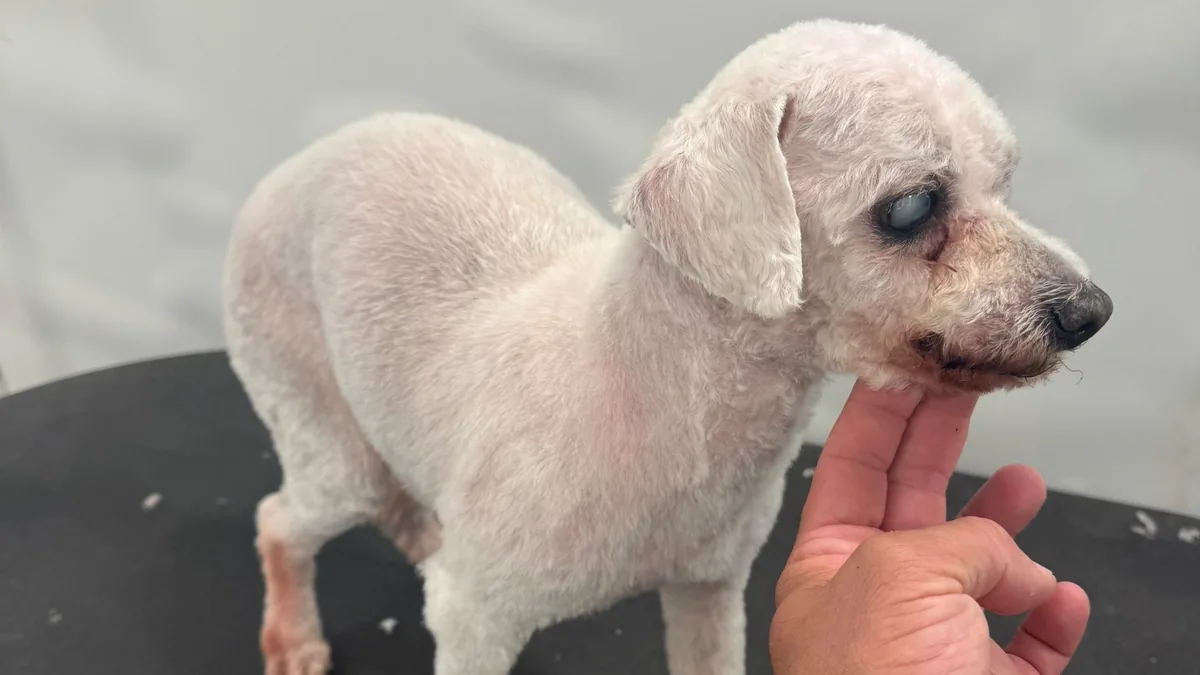
Senior dog grooming is less about style and more about comfort. An older dog may have stiff hips, cloudy eyes, thinner skin or a hard time standing still for long. The coat still needs care, and in many ways it needs more of it, because a matted or overgrown coat and long nails are harder on an aging body. This guide covers what changes as dogs age, how to groom an older dog gently at home, and what to look for in a professional groom.
When is a dog considered a senior?
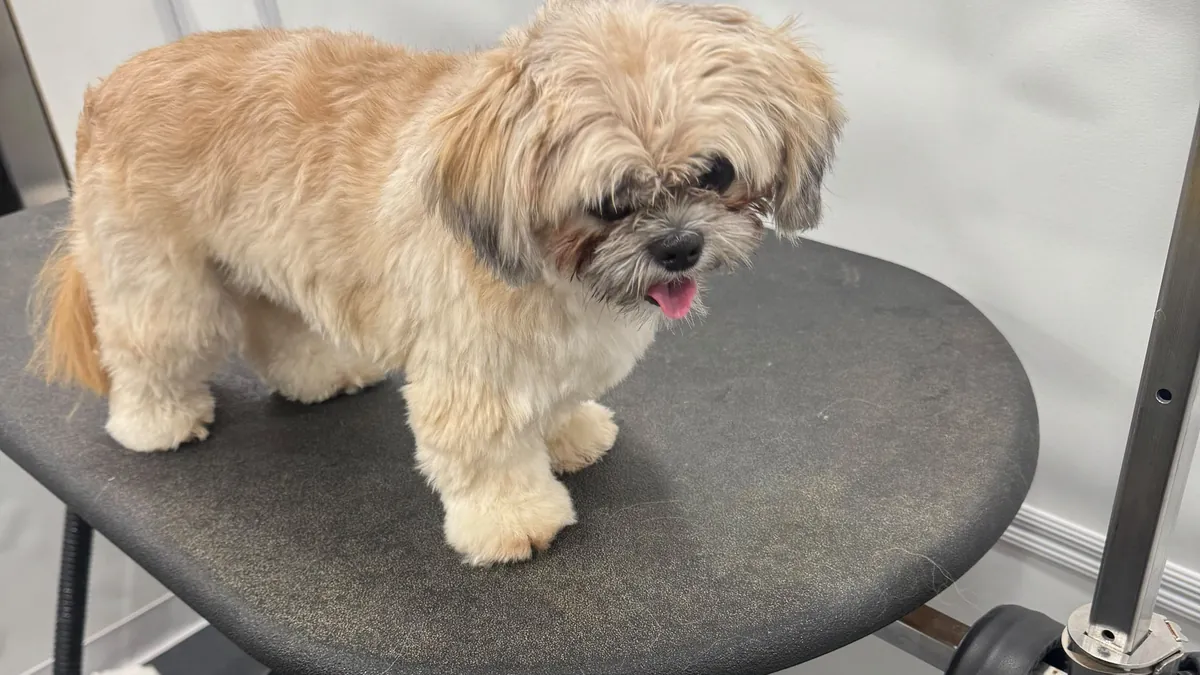
It depends on size. VCA veterinarians say large dogs like Labrador Retrievers are considered senior at about 7 or 8, while small dogs like Shih Tzus are not considered senior until around 10. Many owners notice the change in grooming first: a dog who stands less patiently or flinches at the back legs.
VCA also recommends that senior dogs see the veterinarian more than once a year, because problems develop faster in older dogs. Grooming sits nicely alongside those visits. Regular brushing and handling give you a close look at the coat and skin between checkups.
How does aging change grooming needs?
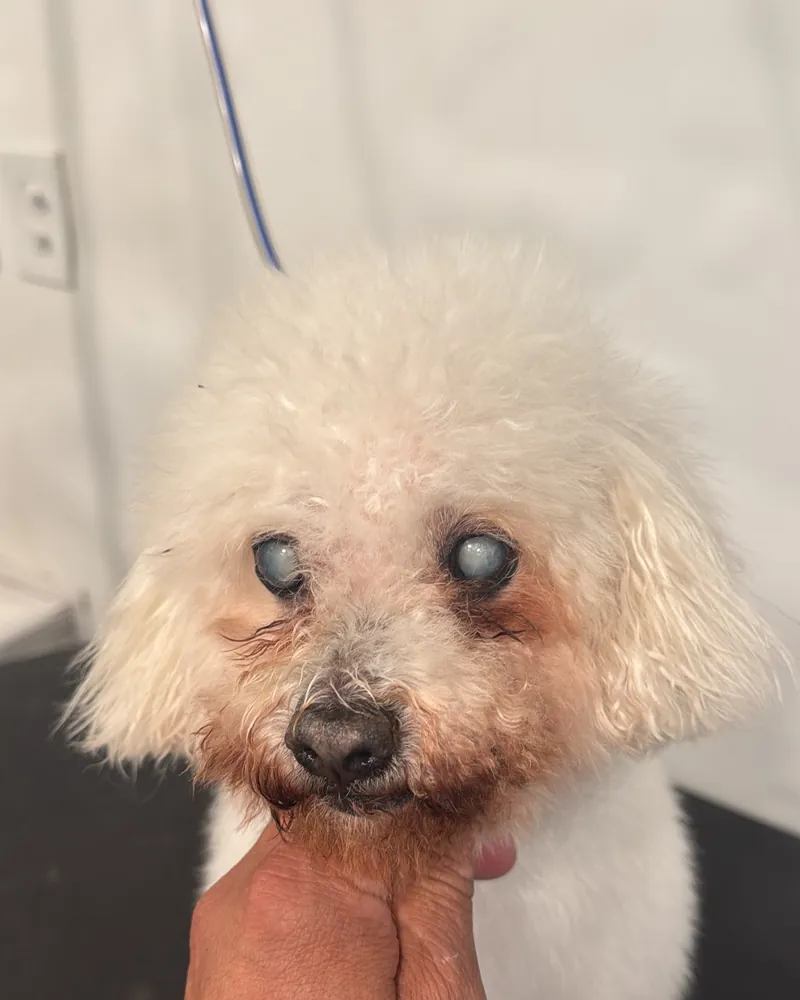
Older dogs often have joint pain, weaker muscles, declining vision or hearing, and changes in skin and coat. Each one affects grooming: standing gets tiring, being touched without warning can startle, and the dog can no longer reach some spots to groom itself. Grooming has to adapt to the body, not the other way around.
| What changes | What VCA veterinarians say | What it means for grooming |
|---|---|---|
| Joints | Osteoarthritis pain affects most senior dogs | Good footing, support under the belly, breaks, gentle leg handling |
| Reach | Daily brushing helps with areas that are hard to reach because of arthritis | Brush the back end, hips and tail regularly |
| Senses | Declining vision and hearing can make dogs startled, anxious or reactive when approached unexpectedly | Approach from the front, talk first, touch the shoulder before the paws |
| Nails | Long claws can cause pain when walking and may curl into the paw pads | Keep nails short on a regular schedule |
| Skin and coat | Brushing lets you evaluate the coat and skin | Look for lumps, sores, flaking or thin patches and tell your vet |
How do you groom a senior dog gently at home?
Keep sessions short and frequent, give your dog solid footing, and work in comfortable positions. A few minutes of brushing on a rug or a non-slip mat, with your dog lying down if that is easier, beats a long session that leaves them sore. Stop before your dog gets tired.
- Let them lie down. Brush one side while your dog lies on a soft, non-slip surface, then the other. There is no rule that grooming has to happen standing up.
- Mind the slippery floors. Hardwood and tile are hard on weak hips. A yoga mat or rubber-backed rug gives grip.
- Support, do not lift. When you need a leg up, lift it only a little, close to the body, and do not stretch a stiff joint out to the side.
- Brush the hard-to-reach spots. The hips, back of the thighs and around the tail mat quickly when a dog stops grooming itself there. Our guide to brushing between grooming appointments shows how to reach the skin gently.
- Keep the sanitary area tidy. Some older dogs have trouble keeping clean back there. A neat sanitary trim helps hygiene and comfort.
- Warm and dry. Older dogs can feel the cold more. After a bath or a rainy walk, dry the coat fully and keep the room warm.
If your dog has a hearing or vision loss, say their name and let them see or sniff your hand before you touch them. VCA veterinarians note that dogs with declining senses can become startled or anxious when approached unexpectedly, and a startled dog may snap even if they never have before.
Why do nails matter more for older dogs?
Because older dogs are often less active, their nails wear down less, and long nails change how a dog stands and walks. VCA veterinarians warn that long claws can cause pain while walking and may curl into the paw pads, causing pain and injury. For a dog with sore joints, that is a real problem.
Check your senior’s nails every couple of weeks. If you hear them clicking on the floor, they are too long. Our step-by-step guide to trimming your dog’s nails at home covers black nails and what to do if a nail bleeds. If your dog finds it hard to hold a paw up, a quick nail trim at your door keeps it to a few minutes of handling.
What should you look for in a professional groom for a senior dog?
A calm setting, patient handling and a groomer who asks about your dog’s health before starting. Shorter, practical cuts are often kinder than elaborate styles, and a regular schedule avoids the long sessions needed to fix a coat that has grown out or matted. Be ready to share your dog’s health details.
A few things to ask about and to share:
- Tell the groomer about health conditions: arthritis, heart issues, seizures, hearing or vision loss, lumps you already know about, and any sore spots.
- Pick an easy cut. A shorter, even cut is easier to keep clean and tangle-free and dries faster after a bath. Ask what length makes sense for your dog.
- Plan for breaks. Ask how the groomer handles a dog who needs to sit or rest partway through.
- Ask your vet about pain medication timing if your dog takes it, so it is working during the groom.
- Watch for changes. A groomer handles your dog from nose to tail. An AKC-quoted groomer with 40 years of experience puts it this way: a good groomer looks for body lumps, soreness, cracked foot pads and ear problems. Anything found should go to your veterinarian.
Is mobile grooming better for senior dogs?
For many seniors, yes. There is no car ride, no waiting room and no long stretch in a kennel. The dog walks a few steps from the front door, is groomed one-on-one, and goes straight back to their own bed. For a stiff or anxious older dog, skipping the trip itself matters.
At Brush Hour, we park our grooming van at your home and one groomer works with one dog, with no cages and no other dogs nearby. Our FAQ puts it simply: anxious dogs, seniors and big dogs that dislike the car skip the drive, the salon noise and the wait in a kennel. When we confirm your appointment, tell us your dog’s age and anything about mobility, hearing, vision or health we should know. If your dog is also nervous about handling, our guide to grooming an anxious dog has practice tips that work well for seniors.
See everything included in a full groom or a lighter mobile dog bath, and prices by size below.
Frequently asked questions
When is a dog considered a senior?
It depends on size. VCA veterinarians say large dogs such as Labrador Retrievers are considered senior at about 7 or 8 years old, while small dogs such as Shih Tzus are not considered senior until around 10.
How often should a senior dog be groomed?
Usually on the same schedule as before, set by the coat, and sometimes more often. Shorter, more regular grooms are often easier on an older dog than long sessions to fix an overgrown or matted coat. Nails especially should stay short, because long nails can make walking painful.
Can a dog with arthritis still be groomed?
Yes, with care. Gentle handling, good footing, support under the body and breaks when needed make a big difference. VCA veterinarians note that daily brushing can help an arthritic dog with areas it can no longer reach. If your dog is on pain medication, ask your veterinarian about timing it before the groom.
Is mobile grooming good for older dogs?
It is often a good fit. Senior dogs skip the car ride, the salon noise and the wait in a kennel. At Brush Hour, one groomer works with one dog in our van at your door. Tell us about your dog’s age, mobility, hearing or vision when you book so we can plan the visit.
What should I do if the groomer finds a lump?
Have your veterinarian check it. Many lumps on older dogs turn out to be harmless, but only a veterinarian can tell, and it is easier to deal with early. Groomers handle the whole body, so they often notice changes first, but they cannot diagnose them.
Sources: VCA Animal Hospitals, “Helping Our Senior Dogs Age Gracefully” (Malcolm Weir, DVM, Ryan Llera, DVM, and Krista Williams, DVM, updated June 19, 2026); American Kennel Club, “How to Groom a Double-Coated Dog” (updated November 19, 2024, quoting groomer Dale Martins). This guide is general information, not veterinary advice. New lumps, sores, limping, hair loss or changes in behavior should be checked by your veterinarian.
Related: Full grooming at your door · Grooming an anxious dog · How to trim your dog’s nails