Grooming at Home
How to Trim Your Dog’s Nails at Home, Step by Step
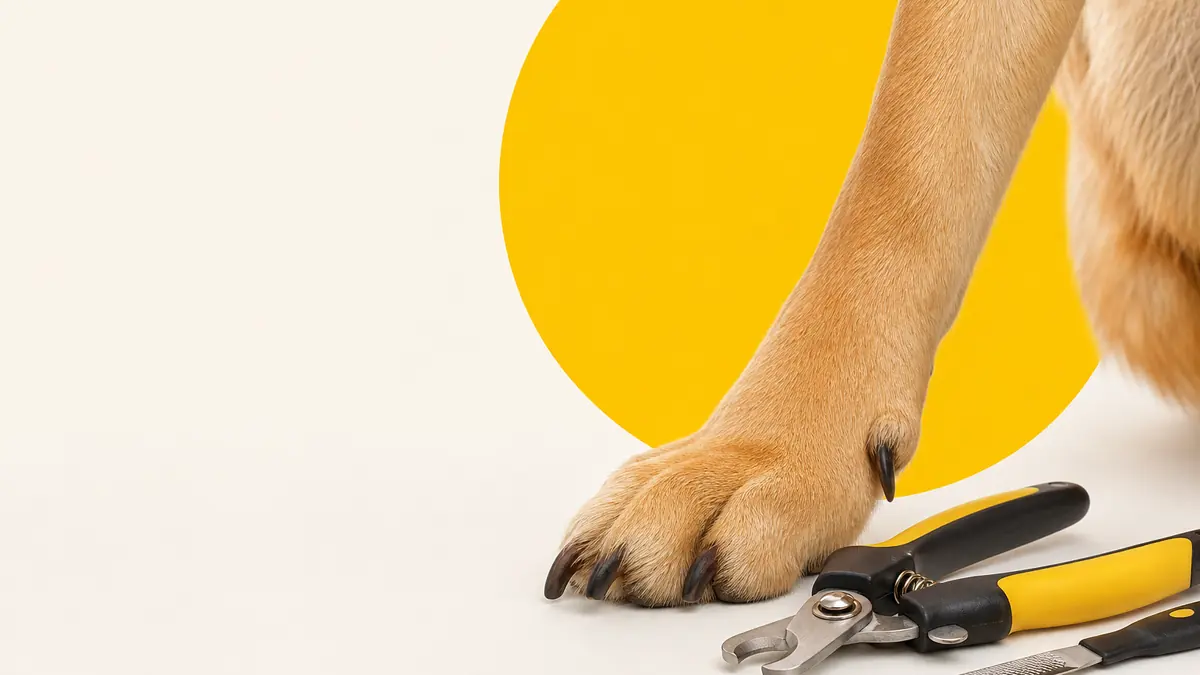
- Trim a little at a time, about once a month, or when the nails touch the ground or click on the floor.
- Avoid the quick, the pink area inside the nail with the blood vessel and nerve.
- On black nails, take thin slices and stop when a darker dot appears in the center of the cut surface.
- If a nail bleeds, press on styptic powder (or flour or cornstarch) and hold gentle pressure.
In this guide
Knowing how to trim dog nails at home is one of the most useful grooming skills you can learn, and one of the most feared. With the right tools, a calm routine and small cuts, most owners can do it safely. This guide walks you through it step by step, including black nails and what to do if a nail bleeds.
Why does nail trimming matter?
Long nails change how a dog walks. The American Kennel Club says long nails can affect your dog’s gait, cause discomfort and make broken nails more likely. VCA veterinarians give a simple test: if your dog’s nails touch the ground when standing, they are too long. Clicking on hard floors is the same problem, heard.
What do you need to trim dog nails?
- Dog nail clippers (scissor style for most dogs), or a nail grinder if your dog prefers it
- Styptic powder, or flour or cornstarch as a backup, in case a nail bleeds
- Good lighting and a non-slip surface
- Treats, lots of them
What is the quick?
The quick is the living part inside each nail, with a blood vessel and a nerve. Cutting into it hurts and bleeds. On light nails you can see it as a pink area. On black nails you cannot. VCA notes that when nails are not trimmed regularly, the quick can grow out almost to the tip.
That is why one big cut on an overgrown nail is risky, and why short, regular trims are kinder than rare ones. Purdue University’s College of Veterinary Medicine also warns owners to take extra care with long-neglected nails for the same reason.
How to trim your dog’s nails, step by step
- Get your dog comfortable. Choose a calm moment. Have your dog sit or lie down, and give a treat just for letting you hold a paw.
- Hold the paw firmly but gently. Press lightly on the toe pad to extend the nail.
- Find your cutting line. On light nails, locate the pink quick and plan to cut well in front of it. VCA suggests making the final cut at or near the point where the nail starts to curve.
- Trim small pieces. Cut a little off the tip. Two small cuts are always better than one big one.
- Check the cut surface. As you get closer to the quick, the center of the cut surface looks softer and darker. That is your signal to stop.
- Reward after every nail or two. Short sessions are fine. One paw today and the rest tomorrow works.
- Do not forget the dewclaws on the inside of the legs, if your dog has them. VCA points out that they never touch the ground, so they often get overgrown.
How do you trim black dog nails?
Trim black dog nails in very thin slices, because you cannot see the quick from outside. VCA veterinarians advise trimming just the very tip when the quick is hidden. After each slice, look at the cut surface: when a dark dot appears in the center, stop. Good light helps.
- Take very thin slices, one at a time, from the tip.
- Look at the cut surface after each slice. At first it looks pale. PetMD explains that a dark dot in the center means you have reached the quick, so stop there.
- Try a grinder. It removes nail gradually and leaves a smooth edge. Hold long fur back, because VCA warns the spinning file can catch hair.
- When in doubt, leave it a little long. You can always take more off next week.
What should you do if you cut the quick?
Stay calm, because your dog reads your reaction. Press a pinch of styptic powder onto the nail tip and hold gentle pressure. VCA veterinarians say flour or cornstarch can stand in if you have no styptic powder. Keep your dog still until the bleeding stops, then end on a treat.
If the bleeding does not stop with pressure, or the toe looks swollen or painful later, contact your veterinarian.
How often should you trim your dog’s nails?
About once a month for most dogs, according to VCA veterinarians. The ASPCA puts it another way: trim when the nails just about touch the ground as your dog walks, which for some dogs means weekly. Dogs who walk a lot on pavement may need trims less often; indoor dogs and seniors usually need them more.
Nail care is one part of a simple routine. Our guide to dog grooming at home covers brushing, bathing, ears and teeth, and how to brush between grooming appointments keeps the rest of the coat easy.
When should a professional trim your dog’s nails?
Let a professional do it when your dog panics, when the nails are very overgrown, or when you are not comfortable with dark nails. Forcing a frightened dog makes every future trim harder. A board-certified veterinary behaviorist writing for VCA recommends short, calm sessions with treats, and a vet visit for very fearful dogs.
At Brush Hour, a stand-alone nail trim costs $50 at your door, and it is included in every Dog Bath and Full Grooming. Nervous or older dog? Read our guides on grooming an anxious dog and grooming a senior dog. Every price is in our dog grooming cost guide.
Want us to handle it? We trim nails at your door, with one groomer focused only on your dog. Request an appointment.
Frequently asked questions
How do I know where to cut my dog’s nails?
On light nails, cut a few millimeters in front of the pink quick. VCA veterinarians suggest making the final cut at or near the point where the nail begins to curve. On dark nails, trim thin slices and stop when a dark dot appears in the center of the cut surface.
How often should I trim my dog’s nails?
About once a month for most dogs, according to VCA veterinarians. A practical test: if the nails touch the ground when your dog stands, or click on hard floors, they are too long.
Is it better to clip or grind dog nails?
Both work. Clippers are faster. A grinder takes nail off gradually and leaves a smooth edge, which gives more control on dark nails, but VCA warns the spinning file can catch long hair, so hold the fur back.
What can I use if I don’t have styptic powder?
VCA veterinarians say flour or cornstarch can be used if you have no styptic powder. Press it onto the nail tip with gentle pressure. If the bleeding does not stop, call your veterinarian.
How much does a professional nail trim cost?
At Brush Hour, a stand-alone nail trim at your door costs $50. It is included in every Dog Bath, Full Grooming and VIP Package.
Sources: VCA Animal Hospitals, “How to Trim a Dog’s Nails” (Courtney Barnes, DVM, and Catherine Barnette, DVM, updated March 20, 2025) and “Taking the Stress out of Nail Trimming for Dogs” (updated September 12, 2025); American Kennel Club, “Dog Grooming at Home: Brushing, Bathing, and Nail Care” (updated September 2, 2026); ASPCA, “Dog Grooming Tips”; Purdue University College of Veterinary Medicine, “Pet Health Tips: General Health”; PetMD, “How To Trim Dog Nails”. This guide is general information, not veterinary advice.