Rainy Season
Wet Dog Smell: Why It Happens and How to Get Rid of It
- Wet dog smell comes from microbes, not dirt alone. Yeasts and bacteria on the coat give off compounds that the evaporating water carries into the air.
- The fix is fast, full drying. Dry before your dog roams the house, and dry to the skin, not just the top of the coat.
- Check the usual suspects: a damp undercoat, a wet collar or harness, the dog bed and the towels.
- See your veterinarian if the smell comes from the ears, comes back within a day or two of a bath, or comes with scratching, head shaking or red skin.
In this guide
If your house has smelled like wet dog since the storms, you have company. San Francisco recorded 2.28 inches of rain by 3 p.m. on November 18, 2026, the most for that date since 1918, according to the National Weather Service as reported by The San Francisco Standard. ABC7 had called the November 13 system the first moderate storm of the season. That is a lot of soggy walks in a few days, and the smell tends to show up right after.
This guide explains where wet dog smell comes from, why some dogs smell for hours after a walk, what actually gets rid of it, and when a smell is a sign to call your veterinarian instead of reaching for the shampoo.
Why do wet dogs smell?
Because of the microbes that live on every dog’s coat. Yeasts and bacteria leave behind volatile organic compounds, and when the coat gets wet, the water evaporating off the fur carries those compounds into the air. Dry, the same coat smells of very little. Wet, it fills the room.
That is how Andy Brunning explains it in an article on the American Kennel Club’s site: walking a dog means taking along a whole community of tiny critters, and the odor comes from moisture evaporation that carries some of their compounds with it. The practical lesson is simple. The longer a coat stays wet, the longer the smell lasts, so drying is the real fix.
Why does my dog still smell after drying off?
Most often because the coat is only dry on top. A thick, curly or double coat can feel dry to your hand and still be damp at the skin for hours, and that damp layer keeps releasing smell. The other common sources are gear and fabric that stayed wet: collars, harnesses, beds and towels.
| Where the smell hides | Clue | What to do |
|---|---|---|
| Damp undercoat | Smell gets stronger when you pet or press into the coat | Dry to the skin with a dryer on a cool setting; brush when dry |
| Collar or harness | Smell is strongest around the neck and chest | Wash it and let it dry fully; the AKC notes they often hold on to smells |
| Bed, blankets, towels | The room smells even when the dog is outside | Wash and dry them; keep one dry towel just for the door |
| Ears | Smell comes from the head, with scratching or head shaking | See your veterinarian; do not just perfume it |
Why do double coats hold the smell longer?
Because the undercoat is a dense, soft layer built to trap air, and it traps water just as well. The AKC notes that in humid weather an undercoat that is not brushed can pack so tightly that it keeps moisture next to the skin. Packed, loose undercoat dries slowly and smells longest.
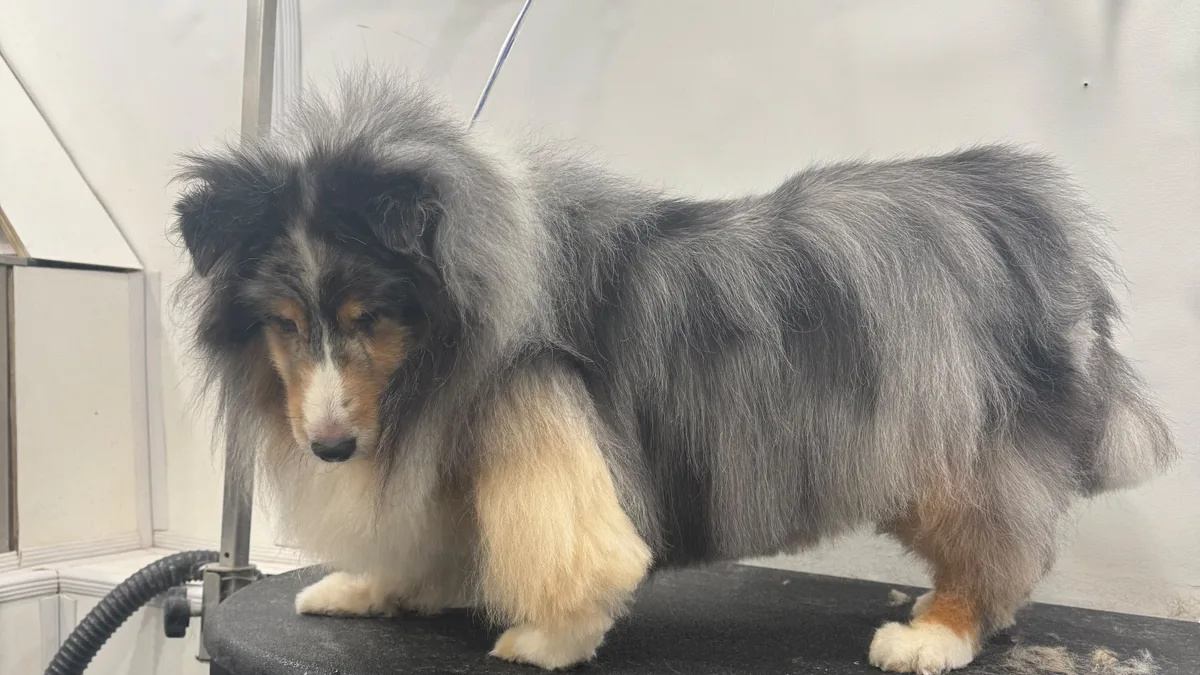
Goldens, Labs, Shepherds and Huskies are the usual examples. Brushing out the loose undercoat before the rainy weeks lets air reach the skin, so the coat dries faster after every walk. This is what came out of one large dog in a single de-shedding session in our van:
Our double-coated dog grooming guide covers the brushing routine, and the de-shedding page explains the service.
How do you get rid of wet dog smell?
Dry your dog completely before they settle on the couch, then deal with whatever stayed wet: the collar, the harness, the bed and the towels. Bathe when the dog is actually dirty or smelly, rinse until the water runs clear, and keep water out of the ears. Do not cover the smell with perfume.
- Dry at the door. The AKC’s advice is to dry a wet dog before they get a chance to move around the house. Keep a towel by the door and one in the car.
- Press, do not rub. Rubbing a long or curly coat back and forth creates tangles that hold water.
- Finish with a dryer on a cool or low setting for thick, long or curly coats. Short coats usually dry with a towel.
- Mind the ears. The Merck Veterinary Manual lists excess moisture in the ears, from the environment or swimming, as a factor that raises the risk of outer ear infections, and advises keeping water out of the ear canals during baths. Our ear cleaning guide shows how to dry them.
- Wash the gear and the bed once a week in the rainy season.
- Brush once dry. Loose hair and small tangles hold moisture and smell.
On bathing, more is not better. The ASPCA suggests a bath at least once every three months for a healthy dog, and the AKC warns that bathing too often can strip the natural oils from the skin. After most rainy walks, a rinse of the legs and belly and a thorough dry is enough. Our El Niño guide has the five-minute routine for wet walks.
When is a bad smell a sign to see the vet?
When it comes from the ears, comes back within a day or two of a good bath and dry, or comes with itching, redness, greasy skin, head shaking or discharge. A groomer can wash and dry a coat, but a bath does not treat an ear or skin problem, and covering the smell can hide one.
The Merck Veterinary Manual lists head shaking, itchy ears, pain, a bad smell and discharge among the signs of an outer ear infection. The AKC is direct about the rest: if the smell seems abnormal or you cannot get it to go away, consult your veterinarian. If your dog is scratching, our guides to hot spots after rain and the oatmeal bath explain what helps and when to stop and call the vet.
Can a mobile dog bath help in the rainy season?
Yes, when the problem is a dirty coat that never fully dries. A professional bath removes the grime, and a blow dry gets a thick coat dry at the skin, which is hard to do at home with a towel. It is also one less wet dog in your bathroom.
Brush Hour parks a grooming van at your home and grooms one dog at a time, with no cages. Every Dog Bath includes a warm bath and full blow dry, nail trim, paw pad and sanitary trims, ear cleaning, teeth brushing and a blueberry facial. We groom across the Bay Area, including San Francisco and San Mateo. Check your price:
Frequently asked questions
Why does my dog smell so bad when wet?
Yeasts and bacteria live on every dog’s coat and leave behind volatile compounds. When the coat gets wet, the water evaporating off the fur carries those compounds into the air, which is why the smell is strongest while the dog dries. The faster the coat dries, the sooner the smell fades.
Why does my dog still smell after a bath?
Usually because the coat is still damp at the skin, or because something else smells: a wet collar or harness, the dog bed or the towels. Dry to the skin, wash the gear and the bedding, and give it a day. If the smell keeps coming back, see your veterinarian.
Can a bad smell mean my dog is sick?
It can. The Merck Veterinary Manual lists a bad smell from the ear, head shaking and discharge among the signs of an outer ear infection, and the AKC says a smell that seems abnormal or will not go away is a reason to consult your veterinarian.
How often should I bathe my dog in the rainy season?
When the dog is dirty or smells, not on a fixed daily rhythm. The ASPCA suggests at least once every three months for a healthy dog, and the AKC warns that bathing too often strips natural oils. After most rainy walks, a rinse of the legs and belly and a good dry is enough.
Does a professional bath get rid of wet dog smell?
A full bath and a blow dry down to the skin removes the dirt and the damp that make the smell worse. At Brush Hour every Dog Bath includes ear cleaning and a full blow dry. It does not treat skin or ear problems; those go to your veterinarian.
Sources: The San Francisco Standard, “Storm chaos: Atmospheric river causes flooding across San Francisco” (November 18, 2026), citing the National Weather Service; ABC7, Bay Area storm timeline (November 13, 2026); American Kennel Club, “Why Do Wet Dogs Smell So Bad?” (updated March 10, 2026) and “How to Groom a Double-Coated Dog”; Merck Veterinary Manual, “Otitis Externa in Animals”; ASPCA, Dog Grooming Tips. This guide is general information, not veterinary advice. If your dog has a smell that will not go away, ear discharge or itchy, red skin, see your veterinarian.
Related: Mobile dog bath at your door · Hot spots after rain · How to clean your dog’s ears