Rainy Season
Matted Dog Hair in the Rainy Season: Why It Happens and What to Do
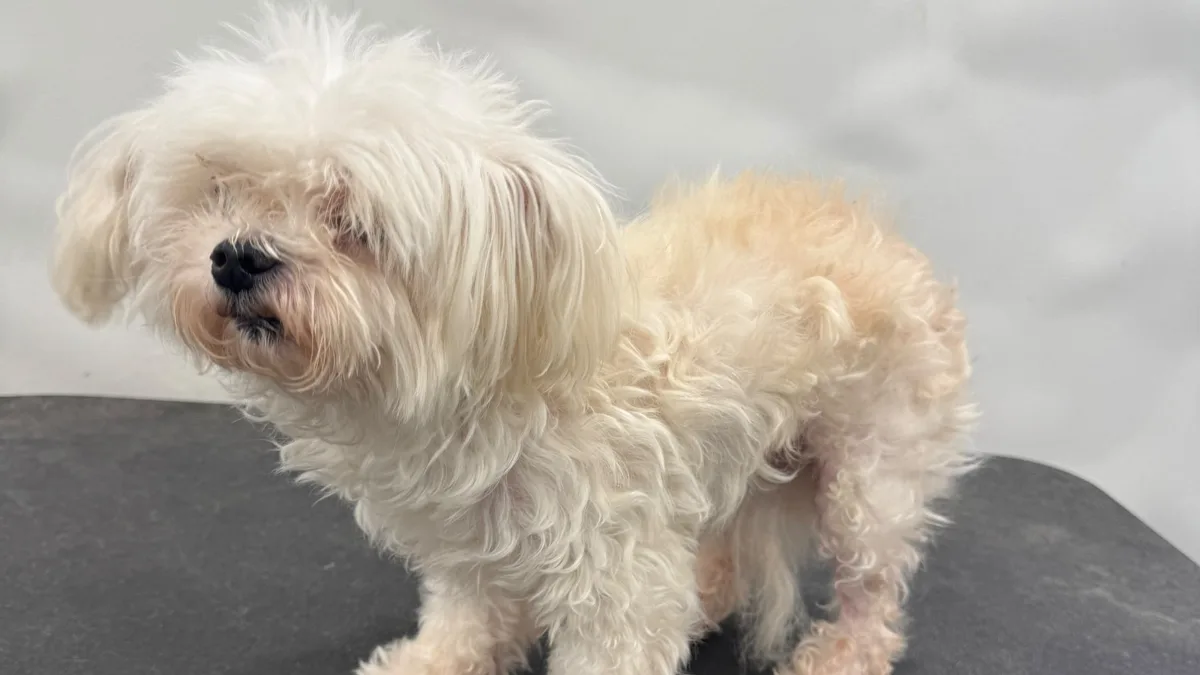
- Rainy weeks make mats. The AKC notes that mats can start as an area of dampness and form where the coat rubs. Wet walks, harness straps and a raincoat give you both.
- Check the rub lines after every wet walk: behind the ears, under the collar and harness, the armpits, the belly and the back of the legs.
- Dry first, then brush. Never brush a soaking coat, and never bathe over tangles: they can lock tight after a bath.
- If the comb cannot reach the skin, call a groomer. Moderate mats can be worked out (dematting, +$35); mats tight to the skin need a short, kind clip. You decide first.
In this guide
Matted dog hair has a season, and in the Bay Area it is the rainy one. A coat that was easy to brush in September can turn into felted patches after a few weeks of wet walks, a damp harness and quick towel rubs at the door. This guide explains why rain makes mats, where to look after a wet walk, what you can fix at home and when to stop and book a groomer.
This winter started fast. San Francisco recorded 2.28 inches of rain by 3 p.m. on November 18, 2026, the most for that date since 1918, according to the National Weather Service as reported by The San Francisco Standard. Weeks like that tend to show up later, in the armpits and along the harness line.
Why does rain make a dog’s coat mat?
Because mats need two things, and wet weeks supply both: moisture and friction. Damp hair clumps, and a harness, collar or raincoat rubs those clumps into knots. As the coat dries, the knots tighten and catch more loose hair. Curly and double coats, which hold on to shed hair, mat fastest.
The American Kennel Club describes it plainly: mats often form in places of friction, like where the front legs and chest meet, and sometimes they start as an area of dampness or a little debris picked up outside. For double-coated dogs, the AKC adds that in humid weather an undercoat that is not brushed can pack so tightly it keeps moisture against the skin. Rain does not create a new problem. It speeds up the one that was already there.
Three rainy-season habits make it worse:
- Rubbing with the towel. Back-and-forth rubbing on a long or curly coat is a fast way to make tangles. Press the towel instead.
- Gear that stays on all day. A damp harness or raincoat strap keeps rubbing the same line of coat for hours.
- Putting off the haircut. Many owners let the coat grow for winter, which is fine, as long as the brushing grows with it.
Where do mats start after a wet walk?
On the rub lines and the spots that dry last: behind the ears, under the collar, along the harness straps, in the armpits, on the belly, between the back legs, on the tail and between the toes. Run a metal comb through each one. If it stops before it reaches the skin, there is a tangle.
| Spot | Why it mats in wet weather |
|---|---|
| Behind the ears | Fine, soft hair that stays damp and gets scratched and rubbed |
| Collar and harness lines | Straps rub the same strip of wet coat on every walk |
| Armpits and chest | Friction from the front legs, and the last place to dry |
| Belly and back legs | Splashed on every walk, often skipped by the towel |
| Feet | Mud and water between the toes; hair felts around the pads |
The comb test is the honest one. The top of a Doodle coat can look fluffy while the hair underneath is packed against the skin, which is why many mats are found only at the groom.
Can you fix mats at home?
Small, loose tangles, yes. Once the coat is completely dry, hold the hair at the base so the pull does not reach the skin, and work the tangle apart from the outer edge in, with your fingers, a slicker brush and then a comb. Short sessions over a few days beat one long, painful one.
That is the AKC’s approach too: start at the outer edge and work toward the body, hold the mat steady with one hand while loosening it with the other, and accept that you may not undo it in one sitting. Two firm rules: do not bathe a dog with tangles, because VCA veterinarians note that tangles can become impossible to remove after a bath, and never cut a mat out with scissors. Our step-by-step guide to brushing between grooming appointments shows how to reach the skin with line brushing.
What if the mats are already tight?
Then it is time for a groomer, and the sooner the better: every wet week packs a mat tighter. How to handle it depends on how close the mats sit to the skin, and our dematting page explains the choice, the price and why we never use scissors. Here is the coat check the way we show it to owners:
If your dog has a double coat, shaving has extra trade-offs; our double-coated dog guide explains them. For Doodles, the Goldendoodle haircut guide covers which cuts are easiest to keep tangle-free.
How do you keep mats away until spring?
Dry to the skin after wet walks, brush a few times a week once the coat is dry, take the harness and raincoat off at home, and keep a regular groom on the calendar. A slightly shorter winter cut is the easiest win for curly coats that keep growing.
- Dry before you brush. Towel by pressing, finish with a dryer on a cool setting for thick or curly coats.
- Take the gear off indoors and let a wet harness or collar dry before the next walk.
- Fit the raincoat so it does not slide and rub under the front legs. Our guide to dog raincoats covers fit.
- Choose the winter length on purpose. Our guide to coat length in winter helps you pick one that stays warm without felting.
- Book before it gets away from you. The Full Grooming page lists common haircut intervals by breed.
We groom at your door across the Bay Area, including San Francisco and San Mateo, one dog at a time.
Frequently asked questions
Why does my dog get more matted in the rainy season?
Mats often start where the coat stays damp or rubs. The AKC notes that mats can begin as an area of dampness and form in places of friction, like where the front legs meet the chest. Rainy weeks add both: a coat that stays wet longer, and harness, raincoat and towel rubbing on it.
Should I brush my dog when the coat is wet?
Not a soaking-wet coat. Towel it by pressing, dry it down to the skin, then brush and comb. Wet tangles stretch and tighten, and VCA veterinarians note that tangles can become impossible to remove after a bath, so brush out tangles before any bath too.
Can I cut a mat out with scissors?
No. The skin gets pulled up inside a mat and is very easy to cut. An ASPCA veterinarian is direct about it: never cut mats out with scissors. Small tangles can be worked loose with a comb; bigger mats are a job for a groomer with clippers.
Is it better to shave a matted dog in winter?
It depends on how tight the mats are. Moderate mats can often be worked out. Mats packed tight against the skin hurt to brush out, and a short clip is kinder; the coat grows back. A groomer should look at the coat with you first.
How do I stop a harness or raincoat from matting my dog’s coat?
Take the gear off as soon as you are home, dry the coat underneath down to the skin, and comb the armpits, chest and strap lines before the hair dries in clumps. Mats form where the coat rubs and stays damp, so a wet harness left on is where they start.
Sources: The San Francisco Standard, “Storm chaos: Atmospheric river causes flooding across San Francisco” (November 18, 2026), citing the National Weather Service; American Kennel Club, “How to Overcome the 4 Biggest Dog Grooming Challenges” (updated August 5, 2026) and “How to Groom a Double-Coated Dog”; VCA Animal Hospitals, “Grooming and Coat Care for Your Dog” (updated January 30, 2026); ASPCA, “A Haircut Could Save a Life: Preventing Your Pet’s Coat from Matting” (Dr. Julie Horton). This guide is general information, not veterinary advice. If the skin under a mat is red, sore or broken, see your veterinarian.
Related: Dematting at your door · How to brush your dog between grooms · Double-coated dog grooming