
Service
Dog teeth brushing, included in every groom
What a groomer can do for your dog’s teeth, what only your veterinarian can do, and why the difference matters.
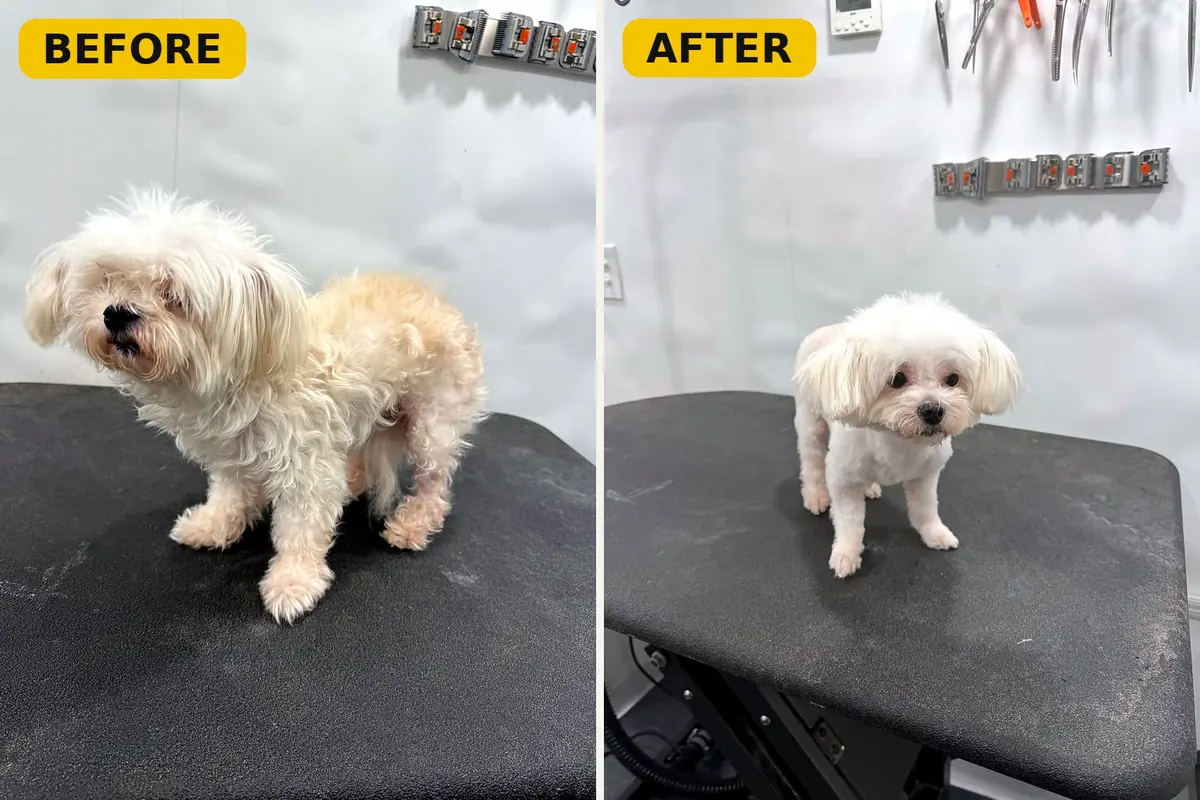
Every Brush Hour bath and groom includes teeth brushing, which freshens breath. It is not a dental cleaning: cleaning below the gumline, where periodontal disease starts, needs a veterinarian and anesthesia. Cornell veterinarians report that 80 to 90% of dogs over age 3 have some degree of periodontal disease.
Price
| Teeth brushing with any Dog Bath, Full Grooming or VIP Package | Included |
New clients get $10 off the first visit. Your groomer confirms the final price with you before booking. See every price.
Why your dog’s teeth need attention
Dental disease is common and mostly hidden. Cornell’s College of Veterinary Medicine reports that 80 to 90% of dogs over age 3 have some degree of periodontal disease, and it tends to be worse in small breeds. It starts below the gumline, where you cannot see it.
What a groomer can do, and what only a veterinarian can do
| Teeth brushing (Brush Hour) | Dental cleaning (veterinarian) | |
|---|---|---|
| What it does | Cleans the visible tooth surface, freshens breath | Removes plaque and tartar above and below the gumline |
| Anesthesia | No | Yes |
| Who can do it | Owners and groomers | Licensed veterinarian or supervised veterinary technician |
The American Veterinary Dental College is direct about it. Reaching below the gumline of every tooth is impossible in an awake dog, so scraping visible tartar without anesthesia is purely cosmetic. It also states that dental scaling by anyone other than a licensed veterinarian or a supervised veterinary technician is practicing veterinary medicine without a license.
That is why Brush Hour only brushes teeth. We never offer dental cleaning or tartar scraping.
How to care for teeth at home
- Brush daily if you can. Cornell calls daily brushing with a veterinary toothpaste the mainstay of home dental care, and the American Veterinary Dental College recommends daily home care from an early age.
- Use dog toothpaste, never human toothpaste.
- Start slowly. Let your dog lick the paste, then touch the teeth with a finger, then introduce the brush over a few days.
- See your veterinarian for regular dental exams and a cleaning under anesthesia when they recommend it.
Our at-home grooming guide fits teeth brushing into a simple weekly routine.
Questions dog owners ask us
How often should I brush my dog’s teeth?
Daily is best. Cornell’s College of Veterinary Medicine calls daily brushing with a veterinary toothpaste the mainstay of home dental care, and the American Veterinary Dental College recommends daily home care from an early age.
Is teeth brushing during grooming the same as a dental cleaning?
No. Brushing cleans the visible surface and freshens breath. A dental cleaning removes tartar below the gumline, and the American Veterinary Dental College says that is impossible in an awake dog.
Is anesthesia-free dental cleaning safe?
The American Veterinary Dental College says removing visible tartar without anesthesia is purely cosmetic, because it cannot clean beneath the gumline where disease is active. It also states that dental scaling by anyone other than a veterinarian or a supervised veterinary technician is practicing veterinary medicine without a license.
Can I use human toothpaste on my dog?
No. Use a toothpaste made for dogs. Cornell veterinarians specifically recommend a veterinary paste.
- Cornell University College of Veterinary Medicine, Riney Canine Health Center, Periodontal disease
- American Veterinary Dental College, Position Statement: Companion Animal Dental Scaling Without Anesthesia
- American Veterinary Dental College, Risks of Anesthesia Free Pet Dental Cleanings