Bay Area Dog Owners
Kennel Cough and Holiday Boarding: Signs, Spread and How to Plan
- Kennel cough is a contagious airway infection that spreads where dogs gather: boarding, daycare, shelters, dog parks.
- The sign is a sudden honking cough, often with gagging, usually 5 to 10 days after exposure.
- Most dogs recover in one to three weeks, but trouble breathing, fever, weakness or not eating means a vet visit right away.
- Before boarding: ask your vet which respiratory vaccines suit your dog, and ask the kennel how it handles coughing dogs.
- After boarding: watch for a cough for about 10 days and keep a coughing dog away from other dogs.
In this guide
Kennel cough is the illness dog owners worry about most when they book a kennel for the holidays. It is common, it is usually mild, and a little planning goes a long way. This guide covers what kennel cough is, how it spreads, the signs to watch for, when it needs a vet, and how to plan boarding, daycare and grooming around it.
What is kennel cough?
Kennel cough is a contagious infection of the windpipe and airways. The Merck Veterinary Manual describes it as inflammation of the trachea with several possible causes, including the bacterium Bordetella bronchiseptica and canine parainfluenza virus. Because more than one germ can be involved, veterinarians also call it canine infectious respiratory disease complex, or CIRDC.
Canine influenza is a separate virus that can look similar. In a March 4, 2026 animal health alert, Los Angeles County Veterinary Public Health said the H3N2 strain does not regularly circulate in local dogs there and that recent cases were linked to imported dogs. It still recommends that dogs who mix with other dogs, at boarding, daycare, dog parks or grooming facilities, be vaccinated against it.
How does kennel cough spread?
Between dogs, wherever they share air, bowls and space. The Merck Veterinary Manual says it spreads rapidly among dogs housed close together. VCA adds a detail that explains why it is hard to avoid: dogs are contagious before they show any signs, so a dog that looks healthy at drop-off can still be spreading it.
That is why the risk is highest in places where many dogs gather: boarding kennels, daycares, shelters, busy dog parks and shared water bowls. When an outbreak is reported locally, VCA advises cutting back time in exactly those places. VCA also says there is no evidence it spreads to people.
What are the signs of kennel cough?
A sudden, honking cough is the classic sign. The Merck Veterinary Manual describes a cough that sounds like a “goose honk,” often followed by retching and gagging, that usually starts 5 to 10 days after exposure. VCA lists other signs to watch for:
- A dry or wet cough, sneezing
- Discharge from the nose or eyes
- Tiredness, weakness or a smaller appetite
- Fever, or fast or labored breathing
How long does kennel cough last, and when is it serious?
Usually one to three weeks. VCA says most cases resolve within seven to 10 days with supportive care, and Merck notes the cough tends to ease in the first five days but can hang on for 10 to 20. VCA advises seeing your veterinarian if the cough is not better within two weeks, and sooner if anything worsens.
Call your vet right away for trouble breathing, fever, thick nasal discharge, weakness or a dog that stops eating. Merck lists these as signs the infection may have moved into the lungs, and notes that puppies are more prone to severe disease while older or weaker dogs can develop chronic bronchitis. One practical tip from VCA: call the clinic before you arrive, so they can keep your coughing dog away from other patients.
How do I prepare my dog for holiday boarding?
Start with your vet, then ask the kennel good questions. A short plan:
- Talk vaccines with your veterinarian, early. VCA recommends keeping respiratory vaccines current, and describes an intranasal vaccine that covers Bordetella, parainfluenza and adenovirus at once. Canine influenza has its own vaccine. Which ones your dog needs, and how far ahead of boarding, is your vet’s call.
- Ask the kennel what it requires and how it handles a dog that starts coughing during a stay: separate space, a call to you, a vet on call.
- Ask about shared spaces: group play, shared water bowls and how often bowls and floors are cleaned.
- Pack your dog’s own bowl and food if the kennel allows it, and leave your vet’s phone number.
- Watch for about 10 days after pickup. The cough usually starts 5 to 10 days after exposure. If it appears, call your vet and keep your dog away from other dogs.
If your dog is a senior or has a heart or lung condition, ask your veterinarian whether boarding is a good idea at all, or whether a sitter at home is safer.
What should I do if my dog starts coughing?
Keep your dog away from other dogs and call your veterinarian. The Merck Veterinary Manual says dogs with kennel cough should be housed separately from other dogs, and VCA says avoiding other dogs helps stop the spread. In practice, that means:
- Skip the dog park, daycare and group walks until your vet clears your dog.
- Call ahead before a vet visit so the clinic can plan.
- Tell anyone who handles your dog, including your groomer, before the visit. If you have a Brush Hour visit coming up, tell us if your dog is coughing when you book or as soon as you notice it.
How does grooming fit in around kennel cough season?
Grooming does not prevent or treat kennel cough; that is your veterinarian’s job. What you can choose is how many other dogs your dog shares space with. Brush Hour grooms one dog at a time in our van, parked at your door: no cages, no waiting room, no shared kennel space. Your dog walks out, gets groomed by one groomer and walks back inside.
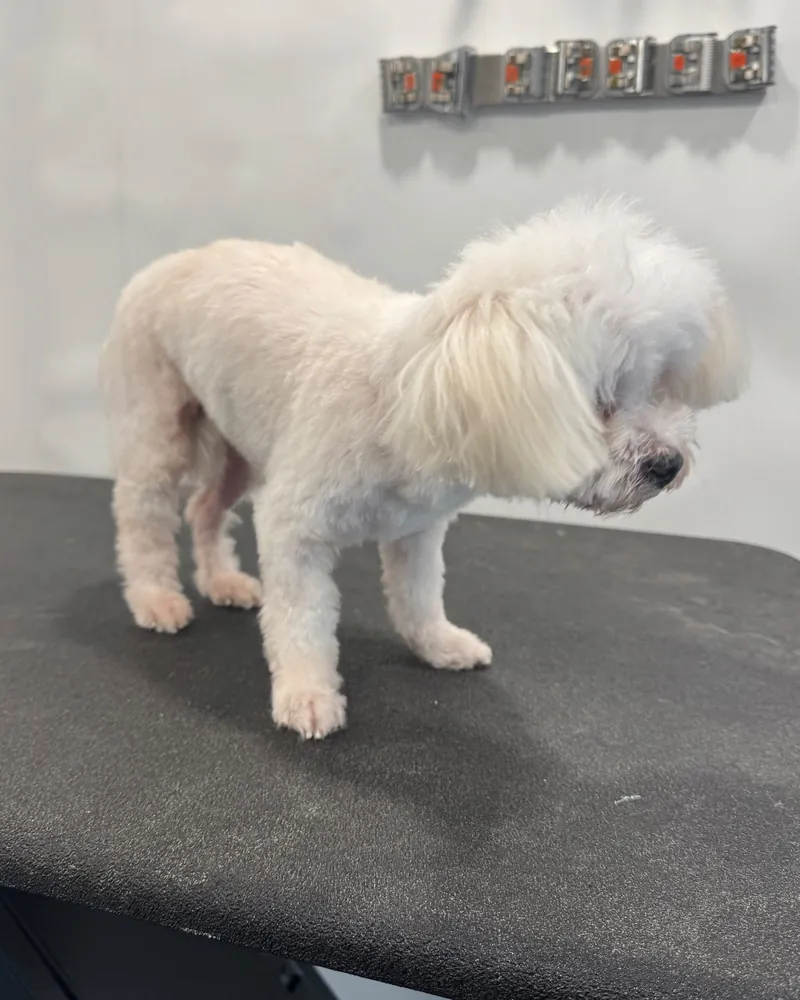
A Dog Bath before the holidays covers the bath and full dry, nails, ears and teeth brushing. Our guide to holiday dog grooming has the timing, mobile grooming vs a salon compares the two honestly, and how mobile dog grooming works explains the visit step by step.
Frequently asked questions
What is kennel cough?
Kennel cough is a contagious inflammation of a dog’s windpipe and airways. The Merck Veterinary Manual lists several causes, including the bacterium Bordetella bronchiseptica and canine parainfluenza virus. Veterinarians also call it canine infectious respiratory disease complex, or CIRDC.
How do dogs catch kennel cough?
From other dogs. The Merck Veterinary Manual says it spreads rapidly among dogs housed close together, and VCA notes that dogs are contagious before they show any signs. That is why boarding kennels, daycares, shelters and other places where many dogs meet carry more risk.
What does kennel cough sound like?
The Merck Veterinary Manual describes a cough that sounds like a goose honk and may be followed by retching or gagging. It usually starts suddenly, about 5 to 10 days after exposure.
How long does kennel cough last?
VCA says most cases resolve within seven to 10 days with supportive care. The Merck Veterinary Manual notes the cough usually eases in the first five days but can last 10 to 20 days. See your veterinarian if the cough is not better within two weeks.
When is kennel cough an emergency?
Call your veterinarian right away for trouble breathing, fast or labored breathing, fever, thick nasal discharge, weakness or a dog that stops eating. Merck notes puppies are more prone to severe disease, and older or weaker dogs can develop chronic bronchitis.
Can people catch kennel cough from dogs?
VCA says there is no evidence that canine respiratory illness spreads to humans. It does spread easily between dogs, so keep a coughing dog away from other dogs until your veterinarian says otherwise.
Should I book a groom if my dog is coughing?
Call your veterinarian first, and tell us if your dog is coughing when you book. Your vet’s advice on when your dog can be around people and other dogs comes first.
Sources: Merck Veterinary Manual, “Kennel Cough (Canine Infectious Tracheobronchitis)” (Caroline C. Tonozzi, DVM, DACVECC); VCA Animal Hospitals, “Everything you need to know about canine respiratory illness”; Los Angeles County Department of Public Health, Veterinary Public Health, “Update on Canine Influenza H3N2 and Recommendations for LA County” (March 4, 2026); KTVU, “Holiday dangers for dogs. How you can keep your pet safe this season” (November 25, 2025). This guide is general information, not veterinary advice. For a coughing dog or vaccine questions, see your veterinarian.
Related: Dog Bath at your door · Holiday dog grooming · Mobile grooming vs salon